
คู่มือพื้นที่ไม่ได้รับความคุ้มครองจากเขื่อนกั้นน้ำในเมืองลอนเซสตัน
ข้อมูลน้ำท่วมแม่น้ำและน้ำท่วมฉับพลันสำหรับชุมชนและทรัพย์สินในลองเซสตัน (Launceston) นอกพื้นที่ป้องกันด้วยคันกั้นน้ำ
สำหรับพื้นที่ที่มีคันกั้นน้ำป้องกัน โปรดดูคู่มืออุทกภัยที่เกี่ยวข้องสำหรับ
- นิวสเตด
- อินเวอร์เมย์
- อีสต์ลอนเซสตันและย่านธุรกิจใจกลางเมืองลอนเซสตัน, และ
- ย่านถนนมาร์กาเร็ต – ลอนเซสตัน.
เวอร์ชัน 1.1 เมษายน 2026 – ดูเวอร์ชัน PDF
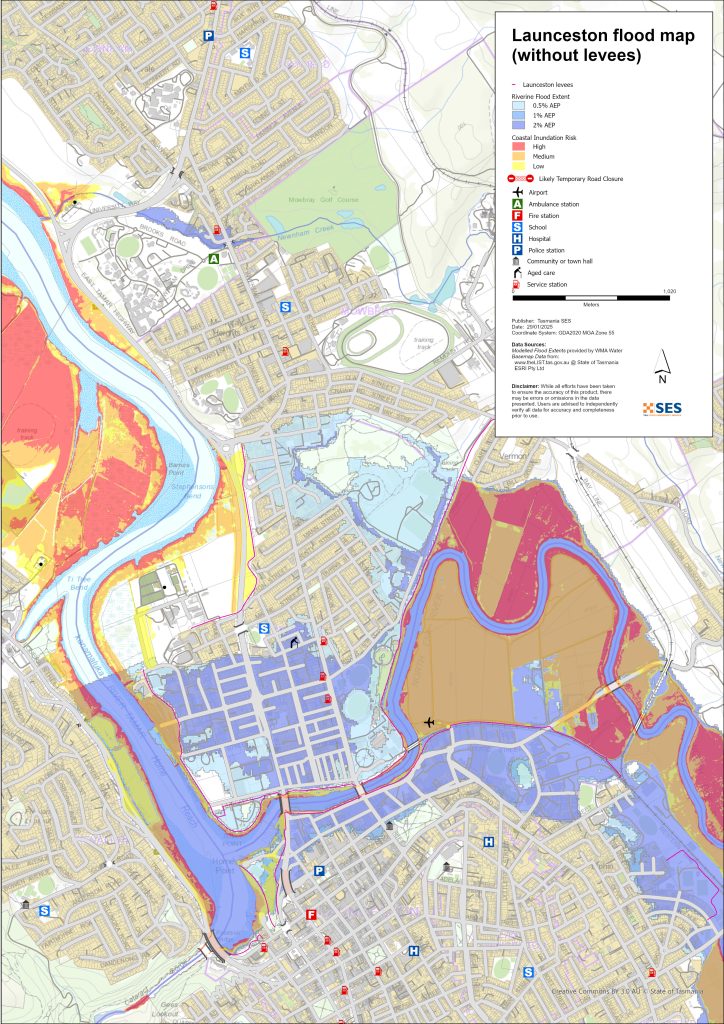
คู่มืออุทกภัยฉบับนี้จัดทำขึ้นสำหรับผู้ที่อาศัยอยู่ในพื้นที่ของลองเซสตัน (Launceston) ที่ไม่มีคันกั้นน้ำป้องกัน แม้ว่าบ้านของคุณจะไม่ถูกน้ำท่วม แต่ทุกคนรอบเมืองลองเซสตันก็จะได้รับผลกระทบจากน้ำท่วมครั้งใหญ่ในเมือง คู่มือนี้ยังครอบคลุมถึงน้ำท่วมระดับเล็กน้อยและระดับปานกลาง ตลอดจนน้ำท่วมฉับพลันในทุกพื้นที่ของเมืองด้วย.
พื้นที่บางส่วนของลอนเซสตันสามารถเกิดน้ำท่วมได้จาก
- แม่น้ำทามาร์เอสทูรี / คานามาลูกา
- แม่น้ำนอร์ท เอสค์
- แม่น้ำเซาท์เอสก์.
นอกจากนี้ยังมีทางน้ำขนาดเล็กบางแห่งที่อาจทำให้น้ำท่วมบ้านเรือนและถนนได้.
พื้นที่ป้องกันน้ำท่วมเมืองลองเซสตัน
คันกั้นน้ำของลอนเซสตันช่วยลดความเสี่ยงจากน้ำท่วมให้กับพื้นที่ส่วนใหญ่ตามแนวแม่น้ำสายหลัก อย่างไรก็ตาม ไม่มีอะไรรับประกันได้ว่าคันกั้นน้ำเหล่านี้จะสามารถต้านทานน้ำท่วมครั้งใหญ่ได้ ประสบการณ์จากประเทศอื่น ๆ แสดงให้เห็นว่าคันกั้นน้ำสามารถพังทลายลงได้ ทั้งแบบค่อยเป็นค่อยไปและแบบกะทันหัน หากคันกั้นน้ำพังทลาย พื้นที่ลุ่มต่ำของเมืองอาจเกิดน้ำท่วมได้อย่างรวดเร็ว ในกรณีที่เกิดน้ำท่วมครั้งใหญ่ ประชาชนในพื้นที่ที่ได้รับการปกป้องโดยคันกั้นน้ำควรทำการอพยพเผื่อไว้
- คันกั้นน้ำพังทลาย หรือ
- น้ำท่วมล้นคันกั้นน้ำ.
โปรดดูคู่มือเกี่ยวกับน้ำท่วมที่เกี่ยวข้องสำหรับพื้นที่ที่ได้รับการคุ้มครองด้วยคันดินของ
- นิวสเตด
- อินเวอร์เมย์
- อีสต์ลอนเซสตันและย่านธุรกิจใจกลางเมืองลอนเซสตัน, และ
- ย่านถนนมาร์กาเร็ต – ลอนเซสตัน.
คู่มือสำหรับพื้นที่ที่มีคันกั้นน้ำคุ้มครองเหล่านี้มีข้อมูลสำคัญเกี่ยวกับ
- ปัจจัยที่กระตุ้นให้ดำเนินการอพยพในกรณีน้ำท่วมรุนแรง
- วิธีการอพยพ รวมถึงเส้นทางอพยพที่ควรใช้.
หากแม่น้ำนอร์ทเอสค์และ/หรือเซาท์เอสค์อาจมีระดับน้ำสูงถึงระดับที่กำหนด พื้นที่เหล่านี้จะมี:
- คำเตือนการอพยพด้วยความสมัครใจ ซึ่งเป็นกรณีที่แนะนำให้ประชาชนอพยพเพื่อความปลอดภัยของตนเอง
- คำเตือนให้อพยพอย่างบังคับ – ซึ่งประชาชนควรออกจากพื้นที่ดังกล่าวเพื่อความปลอดภัยของตนเอง และเพื่อให้สามารถตัดการจ่ายก๊าซ ไฟฟ้า และน้ำในพื้นที่เหล่านั้นได้.
- ในเหตุการณ์น้ำท่วมใหญ่ ผู้คนที่อยู่นอกพื้นที่เสี่ยงภัยน้ำท่วมจำเป็นต้องตระหนักว่า
- เส้นทางจราจรหลักที่ผ่านเมืองอาจถูกปิด
- การจราจรคาดว่าจะหนาแน่นมาก
- อาจมีการตัดลดบริการบางประเภทที่จำเป็น เช่น การบำบัดน้ำ.
- อาจมีการตัดลดบริการอื่น ๆ บางอย่าง เนื่องจากเส้นทางขนส่งหลักถูกตัดลง.
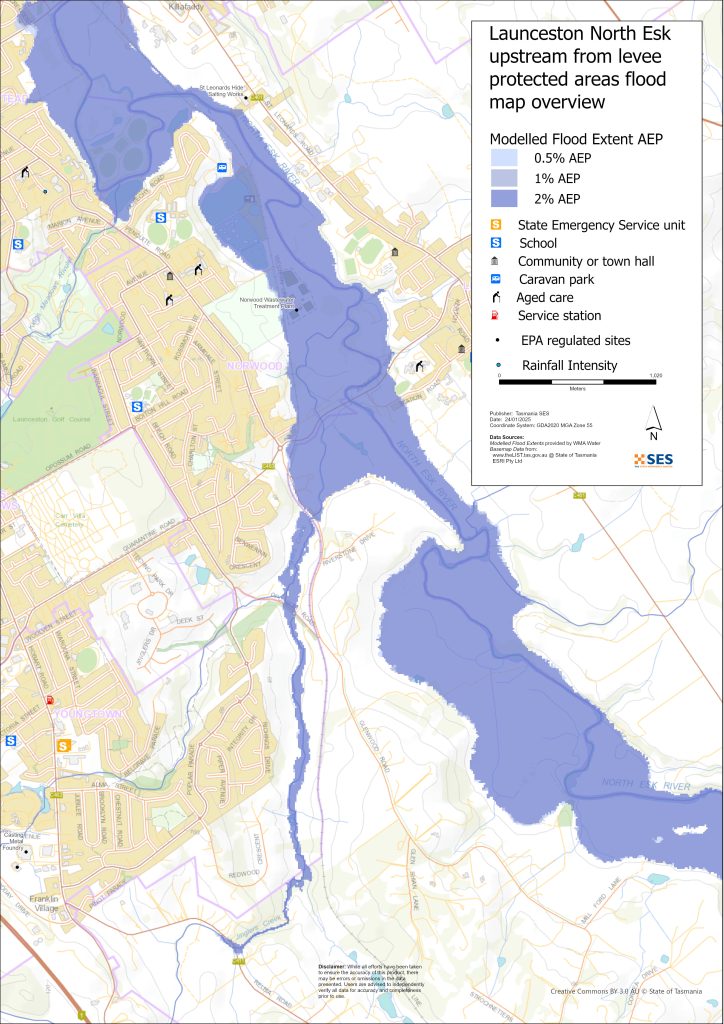
พื้นที่ที่อาจเกิดน้ำท่วมได้นอกเขตป้องกันน้ำท่วมจากคันกั้นน้ำ
แม่น้ำอาจเอ่อล้นเข้าท่วมพื้นที่บางแห่งนอกเขตพื้นที่ที่มีคันกั้นน้ำป้องกันไว้ น้ำขึ้นสูงยังสามารถทำให้ระดับน้ำในพื้นที่ที่อยู่ใกล้กับแม่น้ำทามาร์สูงขึ้นได้อีกด้วย.
หากต้องการดูแผนที่น้ำท่วมที่ละเอียดยิ่งขึ้น โปรดดู www.launceston.tas.gov.au/Emergency-Management-Hub/1.-Understand-your-risk/Flood ถึง
- ตรวจสอบแผนที่น้ำท่วมลอนเซสตันเพื่อประเมินระดับความเสี่ยงจากน้ำท่วมแม่น้ำของคุณ.
- ตรวจสอบแผนที่น้ำท่วมจากน้ำฝนในเขตเมือง (Urban (Stormwater) Flooding Map) เพื่อดูแผนที่น้ำท่วมฉับพลันจากน้ำฝน.
- เรียนรู้เพิ่มเติมเกี่ยวกับกำแพงกันน้ำท่วมของเมืองลอนเซสตัน.
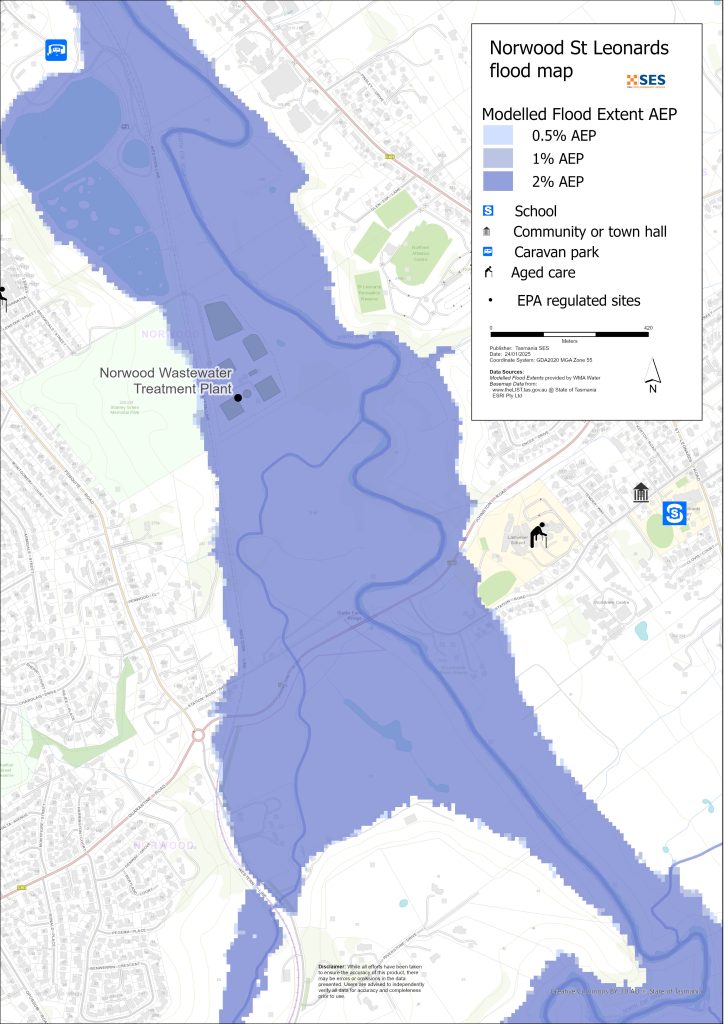
แม่น้ำนอร์ท เอสค์ ที่ล้อมรอบพื้นที่ต่ำ
- คอร์ราลินน์ ค่ายลูกเสือเกาะแพทเทอร์สัน และบ่อเลี้ยงปลาทางประวัติศาสตร์ใกล้เคียง รวมถึงบ้านเรือนบางหลัง
- บริเวณรอบๆ St Leonards
- ถนนสเตชัน
- ถนนฮอบเลอร์สบริดจ์
- ถนนเวฟเวอร์ลีย์
- ถนนเรเวนส์วูด
- พื้นที่นอร์วูดและนิวสเตดที่อยู่นอกเขตพื้นที่ที่ได้รับการคุ้มครองด้วยคันดิน รวมถึงสวนรถคาราวานบนถนนแซนดาวน์ (Old Mac’s Farm)
- ถนนเวเวอร์ลีย์ – ถนนบูเมอร์
พื้นที่ลุ่มต่ำโดยรอบแม่น้ำเซาท์เอสค์และแม่น้ำทามาร์
- เขตคุ้มครองธรรมชาติแคทาร์แอคท์ กอร์จ – อ่างน้ำแรก
- เขตท่าเรือ
- ย่านคิงส์วอร์ฟ
- พื้นที่ทางหลวงเวสต์ทามาร์
พื้นที่ต่ำอื่น ๆ ที่เสี่ยงต่อภาวะน้ำท่วมฉับพลัน / น้ำหลากผิวดิน
น้ำท่วมฉับพลันคือน้ำท่วมที่เกิดขึ้นอย่างรวดเร็วหลังฝนตกหนัก มักจะมีสัญญาณเตือนล่วงหน้าน้อยมากนอกเหนือจากประกาศเตือนภัยสภาพอากาศุนแรงโดยทั่วไป มีลำน้ำสายเล็กๆ มากมายรอบเมืองลอนเซสตันที่สามารถเอ่อล้นได้อย่างรวดเร็ว พื้นที่ลุ่มต่ำที่อาจเกิดน้ำท่วมเนื่องจากน้ำท่วมฉับพลันหรือน้ำไหลหลากบนผิวดิน ได้แก่ พื้นที่ส่วนหนึ่งของ
- เรลเบีย ใกล้กับจิงเกลส์ครีก
- คิงส์เมโดว์ส/พั้นช์เบอล์
- นิวแฮม – จากน้ำท่วมฉับพลันจากห้วยรูนแฮมและห้วยบาร์นาร์ดส์
- เซาท์ ลอนเซสตัน
- เวเวอร์ลีย์
- ถนนฟาราเดย์ จากดิสทิลเลอร์รีครีก
- ถนนเรฟเวนสวูด จากดิสทิลเลอรีครีก/แม่น้ำนอร์ทเอสก์.
หากมีฝนตกหนักมาก อาจเกิดน้ำป่าไหลหลากที่สามารถส่งผลกระทบต่ออาคารและถนนในพื้นที่ใดก็ได้.
พื้นที่รอบๆ ลอนเซสตัน
สำหรับข้อมูลเกี่ยวกับน้ำท่วมในพื้นที่รอบข้าง โปรดดูคู่มือที่เกี่ยวข้องในบริเวณใกล้เคียงสำหรับ:
- ลิลีย์เดลและพื้นที่โดยรอบ
- นูนามาราและพื้นที่โดยรอบ – กำลังอยู่ระหว่างการพัฒนา
- แฮดสเพน/แบล็กสโตน ไฮทส์
คุณมีความเสี่ยงต่อน้ำท่วมหรือไม่
พื้นที่เมืองลอนเซสตันมีประวัติศาสตร์การน้ำท่วมมาอย่างยาวนาน ตั้งแต่ยุคนักตั้งถิ่นฐานชาวยุโรป
- ในปี 1852, 1863 และ 1893 มีเหตุการณ์น้ำท่วมรุนแรงที่บันทึกไว้สำหรับเมืองลอนเซสตัน.
- ปี 1929 คืออุทกภัยที่รุนแรงที่สุดเท่าที่มีการบันทึกไว้ในประวัติศาสตร์สมัยใหม่ บ้านเรือนและอาคารมากกว่าหนึ่งพันหลังได้รับความเสียหาย โดยบางหลังถูกพัดพาไปจากฐานราก สะพานแขวนสองแห่งบริเวณพื้นที่จอร์จได้รับความเสียหาย ประชาชนสี่พันคนได้รับการอพยพออกจากพื้นที่อินเวอร์เมย์, อินเวอร์เอสค์ และถนนมาร์กาเรต กว่าที่ลอนเซสตันจะฟื้นตัวจากอุทกภัยได้ก็คือในปี 1940 อุทกภัยในปี 1929 เป็นแรงจูงใจให้มีการสร้างคันกั้นน้ำ.
- 2016 – ลาングส์ตันเตรียมพร้อมสำหรับเหตุการณ์น้ำท่วมใหญ่และปิดกั้นบางส่วนของเขื่อนกั้นน้ำ. การปรับปรุงระบบเขื่อนกั้นน้ำก่อนหน้านี้ช่วยหลีกเลี่ยงการสูญเสียประมาณ $216 ล้านบาท หากเขื่อนกั้นน้ำเก่าล้มเหลว.
- 2022 – ลอนเซสตันเกือบจะประสบกับเหตุการณ์น้ำท่วมใหญ่.
การพยากรณ์ คำเตือน และการสังเกตการณ์ของสำนักงานอุตุนิยมวิทยา (BoM)
BoM ออก เฝ้าระวังน้ำท่วม เมื่อการคาดการณ์สภาพอากาศอาจก่อให้เกิดน้ำท่วมในพื้นที่ดังกล่าว การแจ้งเตือนน้ำท่วมอาจ:
- สำหรับพื้นที่เฉพาะ เช่น แม่น้ำเซาท์เอสก์ เช่น พื้นที่รับน้ำ หรือ
- ให้เป็นแบบทั่วไป เช่น สำหรับ ลุ่มแม่น้ำตอนกลางตอนเหนือ
ปัญหา BoM ประกาศเตือนภัยน้ำท่วม พร้อมระดับน้ำท่วมที่เฉพาะเจาะจงสำหรับแม่น้ำเซาท์เอสค์และแม่น้ำนอร์ทเอสค์ เครื่องวัดระดับน้ำท่วมที่ตั้งอยู่ตามริมแม่น้ำจะให้คำเตือนเกี่ยวกับ
- ระดับน้ำท่วม, และ
- ผลกระทบที่อาจเกิดขึ้นในเมืองลอนเซสตัน.
น้ำขึ้นสูงก็อาจทำให้น้ำท่วมรุนแรงขึ้นได้.
สำนักงานจะออกคำเตือนน้ำท่วมระดับเล็กน้อย ระดับปานกลาง หรือระดับรุนแรง เมื่อแม่น้ำนอร์ท เอสค์ หรือแม่น้ำเซาท์ เอสค์ มีแนวโน้มจะถึงระดับความสูงที่กำหนดไว้ ตารางด้านล่างนี้ยังแสดงระดับที่ SES จะออกคำเตือนให้อพยพเนื่องจากน้ำท่วมจากแม่น้ำทั้งสองสายนี้.
| สถานีวัดระดับน้ำ | เล็กน้อย | ปานกลาง | น้ำท่วมใหญ่ | จุดตัดสินใจสำคัญในการอพยพ |
| แม่น้ำนอร์ท เอสค์ @ คอร์รา ลินน์ |
2.7 มิลลิแอมป์-ชั่วโมง 80 m³/s |
3.6 mAHD 200 m³/s |
4.9 มิลลิแอมป์-ชั่วโมง 419 ลบ.ม./วินาที ประมาณ 20% AEP |
6.1 mAHD 800 m³/s เกี่ยวกับ 2% AEP พื้นที่คุ้มครองคันกั้นน้ำนิวสเตด (LPA) |
| แม่น้ำเซาท์เอสค์ ที่ เทรวัลลินพอนด์ |
128.2 mAHD ประมาณ 420 ลบ.ม./วินาที > 20% AEP |
129.9 mAHD ประมาณ. 1500 m³/s Approx. 10%AEP |
130.9 เมตรAHD ประมาณ. 2,000 m³/s ประมาณ 5% AEP |
2250 ลบ.ม./วินาที ระหว่าง 2%-1% AEP พื้นที่คุ้มครองคันกั้นน้ำอินเวอร์เมย์/อินเวอร์เอสก์ |
|
2500 m³/s – ระหว่าง <1% AEP เมือง / พื้นที่ป้องกันคันกั้นน้ำอีสต์ลอนเซสตัน |
||||
|
3500 m³/s – ระหว่าง >1% AEP พื้นที่ป้องกันคันกั้นน้ำถนนมาร์กาเร็ต |
บันทึกย่อ:
- ลูกบาศก์เมตรต่อวินาที (คิวเมก) – น้ำปริมาณหนึ่งลูกบาศก์เมตรไหลผ่านจุดหนึ่งในเวลาหนึ่งวินาที น้ำหนึ่งลูกบาศก์เมตรเท่ากับหนึ่งพันลิตรและมีน้ำหนักหนึ่งตัน.
- Annual Exceedance Probability (%AEP) is the likelihood of such an event happening any given year, based on historical records up to 2016. With climate change, this likelihood is changing. Updates of this data is underway.
- mAHD – เมตรเหนือ datum ความสูง นี่คือความสูงท้องถิ่นสำหรับสถานีวัดระดับน้ำ.
ฉันควรทำอย่างไร
- ตรวจสอบแผนที่เพื่อดูว่าบ้านหรือธุรกิจของคุณอาจเกิดน้ำท่วมหรือไม่.
- ประเมินบ้านหรือธุรกิจของคุณและเตรียมพร้อมเพื่อลดความเสียหายจากน้ำท่วมที่อาจเกิดขึ้น.
- ตรวจสอบว่าคุณสามารถเดินทางกลับบ้าน ที่ทำงาน หรือโรงเรียนได้อย่างปลอดภัยในช่วงน้ำท่วมหรือไม่.
- จัดทำแผนฉุกเฉินประจำบ้าน พิจารณาว่าคุณจำเป็นต้องอพยพก่อนเกิดน้ำท่วมหรือไม่ ดู เตรียมพร้อมรับมือเหตุฉุกเฉิน– คู่มือสำหรับบุคคลและครัวเรือนในการเตรียมพร้อมรับมือกับเหตุฉุกเฉิน.
- หากคุณเป็นผู้ผลิตขั้นปฐมภูมิ ชุดอุปกรณ์เตรียมความพร้อมรับมือน้ำท่วมสำหรับฟาร์ม ให้คำแนะนำเกี่ยวกับการเตรียมตัวรับมือกับอุทกภัยเพื่อช่วยปกป้องธุรกิจและสินค้าคงคลังของคุณ.
- หากคุณดำเนินธุรกิจหรือองค์กรอื่น ลองดูข้อมูลจากรัฐบาลแทสมาเนีย ธุรกิจที่พร้อมรับมือภาวะฉุกเฉิน เครื่องมือออนไลน์
- หากคุณอาจถูกกักตัวและคุณต้องเข้าถึงบริการ คุณอาจต้องอพยพออกไปก่อน.
- หากคุณกำลังตั้งแคมป์ในพื้นที่เสี่ยงต่อน้ำท่วม ควรติดตามข่าวสารอย่างใกล้ชิด และย้ายไปยังที่สูงทันทีหากคาดว่าจะมีน้ำท่วม.
น้ำท่วม เช่น ที่แสดงในแผนที่ หรืออาจจะหนักกว่านี้ จะเกิดขึ้นอีกครั้ง ไม่มีน้ำท่วมสองครั้งที่เหมือนกัน.
หากคุณอาศัยอยู่ในพื้นที่ลุ่มต่ำหรือใกล้ทางน้ำ บ้านของคุณอาจถูกน้ำท่วม แม้ว่าบ้านของคุณจะปลอดภัย คุณอาจต้องอ้อมไปรอบๆ บริเวณที่น้ำท่วม หรือทางเข้าบ้านของคุณอาจถูกตัดขาด ห้ามขับรถหรือเดินลุยเข้าไปในน้ำท่วมเด็ดขาด ถนนและสะพานอาจถูกพัดหายไปหรือไม่ปลอดภัย หลีกเลี่ยงการเดินทางในช่วงน้ำท่วม.
การรู้ว่าต้องทำอะไรสามารถช่วยชีวิตคุณและปกป้องทรัพย์สินของคุณได้ การมีแผนรับมือเหตุฉุกเฉินที่บ้านเป็นวิธีเตรียมพร้อมที่ดีที่สุดวิธีหนึ่ง กำหนดเหตุการณ์สภาพอากาศและปริมาณน้ำฝนที่จะกระตุ้นให้ลงมือปฏิบัติ.
การพยากรณ์ คำเตือน และการสังเกตการณ์ของสำนักงานอุตุนิยมวิทยา (BoM)
BoM ออก เฝ้าระวังน้ำท่วม เมื่อการคาดการณ์สภาพอากาศอาจก่อให้เกิดน้ำท่วมในพื้นที่ดังกล่าว การแจ้งเตือนน้ำท่วมอาจ:
- สำหรับพื้นที่เฉพาะ เช่น แม่น้ำเซาท์เอสก์ เช่น พื้นที่รับน้ำ หรือ
- ให้เป็นแบบทั่วไป เช่น สำหรับ ลุ่มแม่น้ำตอนกลางตอนเหนือ
ปัญหา BoM ประกาศเตือนภัยน้ำท่วม พร้อมระดับน้ำท่วมที่เฉพาะเจาะจงสำหรับแม่น้ำเซาท์เอสค์และแม่น้ำนอร์ทเอสค์ เครื่องวัดระดับน้ำท่วมที่ตั้งอยู่ตามริมแม่น้ำจะให้คำเตือนเกี่ยวกับ
- ระดับน้ำท่วม, และ
- ผลกระทบที่อาจเกิดขึ้นในเมืองลอนเซสตัน.
น้ำขึ้นสูงก็อาจทำให้น้ำท่วมรุนแรงขึ้นได้.
สำนักงานจะออกคำเตือนน้ำท่วมระดับเล็กน้อย ระดับปานกลาง หรือระดับรุนแรง เมื่อแม่น้ำนอร์ท เอสค์ หรือแม่น้ำเซาท์ เอสค์ มีแนวโน้มจะถึงระดับความสูงที่กำหนดไว้ ตารางด้านล่างนี้ยังแสดงระดับที่ SES จะออกคำเตือนให้อพยพเนื่องจากน้ำท่วมจากแม่น้ำทั้งสองสายนี้.
| สถานีวัดระดับน้ำ | เล็กน้อย | ปานกลาง | น้ำท่วมใหญ่ | จุดตัดสินใจสำคัญในการอพยพ |
| แม่น้ำนอร์ท เอสค์ @ คอร์รา ลินน์ | 2.7 มิลลิแอมป์-ชั่วโมง
80 m³/s |
3.6 mAHD
200 m³/s |
4.9 มิลลิแอมป์-ชั่วโมง
419 ลบ.ม./วินาที ประมาณ 20% AEP |
6.1 mAHD
800 m³/s เกี่ยวกับ 2% AEP พื้นที่คุ้มครองคันกั้นน้ำนิวสเตด (LPA) |
| แม่น้ำเซาท์เอสค์ ที่ เทรวัลลินพอนด์ | 128.2 mAHD ประมาณ 420 ลบ.ม./วินาที
> 20% AEP |
129.9 mAHD ประมาณ.
1500 m³/s Approx. 10%AEP |
130.9 เมตรAHD ประมาณ.
2,000 m³/s ประมาณ 5% AEP |
2250 ลบ.ม./วินาที
ระหว่าง 2%-1% AEP พื้นที่คุ้มครองคันกั้นน้ำอินเวอร์เมย์/อินเวอร์เอสก์ |
| 2500 m³/s – ระหว่าง <1% AEP
เมือง / พื้นที่ป้องกันคันกั้นน้ำอีสต์ลอนเซสตัน |
||||
| 3500 m³/s – ระหว่าง >1% AEP
พื้นที่ป้องกันคันกั้นน้ำถนนมาร์กาเร็ต |
บันทึกย่อ:
- ลูกบาศก์เมตรต่อวินาที (คิวเมก) – น้ำปริมาณหนึ่งลูกบาศก์เมตรไหลผ่านจุดหนึ่งในเวลาหนึ่งวินาที น้ำหนึ่งลูกบาศก์เมตรเท่ากับหนึ่งพันลิตรและมีน้ำหนักหนึ่งตัน.
- Annual Exceedance Probability (%AEP) is the likelihood of such an event happening any given year, based on historical records up to 2016. With climate change, this likelihood is changing. Updates of this data is underway.
- mAHD – เมตรเหนือ datum ความสูง นี่คือความสูงท้องถิ่นสำหรับสถานีวัดระดับน้ำ.
ทำความเข้าใจคำเตือนและข้อมูลสำคัญ
เฝ้าระวังสิ่งที่เกิดขึ้นรอบตัวคุณ ตรวจสอบพยากรณ์อากาศ การสังเกตการณ์ และคำเตือนเป็นประจำ.
 |
คำแนะนำ (สีเหลือง): มีเหตุการณ์เกิดขึ้น ยังไม่มีอันตรายใดๆ โปรดติดตามความคืบหน้า เผื่อสถานการณ์เปลี่ยนแปลง. |
 |
ดูและดำเนินการ (สีส้ม): ระดับภัยคุกคามสูงขึ้น สภาพการณ์กำลังเปลี่ยนแปลงและคุณต้องเริ่มดำเนินการทันทีเพื่อปกป้องตัวเองและครอบครัว |
 |
คำเตือนฉุกเฉิน (สีแดง): คำเตือนฉุกเฉินคือระดับการเตือนภัยสูงสุด คุณอาจตกอยู่ในอันตรายและต้องดำเนินการทันที ความล่าช้าใดๆ ในตอนนี้จะทำให้ชีวิตของคุณตกอยู่ในความเสี่ยง. |
 |
อัปเดตชุมชน (สีน้ำเงิน): ข้อมูลและการอัปเดตเฉพาะสำหรับชุมชนที่ได้รับผลกระทบเกี่ยวกับเหตุการณ์หรืออุบัติการณ์เฉพาะ. |
 |
เหตุการณ์ (สีขาว): เหตุการณ์คือการเกิดขึ้นครั้งแรกของเหตุการณ์ก่อนที่จะกลายเป็นสัญญาณเตือนภัยฉุกเฉิน ทันทีที่ได้รับรายงานเหตุการณ์ TasALERT จะเผยแพร่ข้อมูลพื้นฐานรวมถึงประเภทและสถานที่เกิดเหตุ. |
ระดับน้ำท่วม
แม้ว่าน้ำท่วมแต่ละครั้งจะไม่เหมือนกัน แต่ต่อไปนี้คือสิ่งที่คุณคาดหวังได้จากระดับน้ำท่วมที่แตกต่างกันในพื้นที่ แม้ว่าทรัพย์สินของคุณจะไม่ถูกน้ำท่วม แต่คุณก็ต้องคำนึงถึงการเข้าถึงด้วย ระดับน้ำฝนที่แตกต่างกันสามารถทำให้น้ำท่วมได้ ขึ้นอยู่กับความรุนแรง ระยะเวลา และพื้นดินมีความชื้นมากน้อยเพียงใดก่อนหน้านี้ และปริมาณน้ำฝนที่ตก.
น้ำท่วมเล็กน้อยตามแม่น้ำจากแม่น้ำนอร์ท เอสค์/เซาท์ เอสค์ และแม่น้ำทามาร์
แม่น้ำนอร์ทเอสก์ที่คอร์ราลินน์ อย่างน้อย 2.7 เมตร
- พื้นที่เกษตรกรรม / สวนสาธารณะริมแม่น้ำ เช่น จุดปิกนิกเซนต์เลโอนาร์ดส์
- อาจมีการปิดถนน - เฮนรีสตรีท
- อสังหาริมทรัพย์ที่ตั้งอยู่ในพื้นที่ต่ำใกล้แม่น้ำบน:
- ถนนสเตชัน
- ถนนเฮนรี
- ถนนคิลลาฟัดดี้
- สวนคาราวาน Old Mac’s Farm บนถนน Sandown Road
- ทางรถไฟสายตะวันตกและย่านสถานี
- สวนสก็อตช์ โอ๊คเบิร์น และสวนควีชี
- แม่น้ำเซาท์ เอสค์ ที่บ่อน้ำเทรวาลลิน สูงอย่างน้อย 128.2 เมตร
- พื้นที่เกษตรกรรม/สวนริมแม่น้ำ เช่น เขตสงวนธรรมชาติแคทารักต์ กอร์จ และสระว่ายน้ำกอร์จ รวมถึงพื้นที่รอบโฮม พอยต์ พาเรด
- คิงส์ วาร์ฟ
- ซีพอร์ต โฮม พอยท์ พาเหรด พื้นที่ลุ่มต่ำ
- สโมสรพายเรือเวสต์ทามาร์
- ย่านถนนเฮนรี
- น้ำท่วมอาจเริ่มส่งผลกระทบต่อช่องทางเดินรถทิศใต้ของทางหลวงเวสต์ทามาร์ โดยจะมีการเปลี่ยนเส้นทางให้ใช้เส้นทางอื่นแทน.
น้ำท่วมปานกลางจากแม่น้ำนอร์ทเอสก์ เซาท์เอสก์ และแม่น้ำทามาร์
- ประตูน้ำหลายแห่งบนคันกั้นน้ำจะปิดลง ซึ่งทำให้การเคลื่อนที่ภายในเมืองถูกจำกัด เส้นทางหลักที่จะปิดการสัญจรข้ามแม่น้ำ ได้แก่:
- ถนนเวสต์ทามาร์
- ถนนเฮนรี
แม่น้ำนอร์ท เอสค์ ที่คอร์รา ลินน์ สูงอย่างน้อย 3.6 เมตร
เนื่องจากน้ำท่วมเล็กน้อย รวมถึง
- ถนน Station Road และพื้นที่ที่อยู่ในระดับต่ำอื่นๆ ใกล้แม่น้ำ
- พื้นที่อื่น ๆ บนถนนเฮนรี และอสังหาริมทรัพย์ในพื้นที่ต่ำ
- สนามแข่งขัน / เวิร์กช็อป ของวิทยาลัยสกอตช์ โอ๊กเบิร์น
- ถนนฮอบเลอร์ส บริดจ์ และศูนย์เน็ตบอล
- พื้นที่ลุ่มต่ำบนถนนคิลลาฟัดดี
- อสังหาริมทรัพย์ในพื้นที่ต่ำบนถนนกลีนวูด
- ถนนบิล โกรฟ, มอว์เบรย์.
- แม่น้ำเซาท์เอสค์ที่บ่อน้ำเทรวาลลิน สูงอย่างน้อย 129.9 เมตร
- ตามที่มีน้ำท่วมขังเล็กน้อยบวกกับ
- ทางหลวงเวสต์ทามาร์ ทั้งสองช่องจราจรเบี่ยงไปใช้ถนนสายรอง
- ถนนซีพอร์ต บูเลวาร์ด
- จะมีผลกระทบบางประการในบริเวณรอบถนนเฮนรี และพื้นที่อื่น ๆ บริเวณตอนล่างของแม่น้ำนอร์ท เอสค์
- 1600 ลบ.ม./วินาที ที่บึงเทรแวลลีน – การอพยพด้วยความสมัครใจในบางพื้นที่ของอินเวอร์เมย์ (ดูคู่มืออุทกภัยอินเวอร์เมย์)
- ถนนบิล โกรฟ, มอว์เบรย์.
น้ำท่วมใหญ่จากแม่น้ำนอร์ท เอสค์/เซาท์ เอสค์ และแม่น้ำทามาร์
แม่น้ำนอร์ท เอสค์ ที่คอร์รา ลินน์ สูงอย่างน้อย 4.9 เมตร (ประมาณ 20% AEP)
ตามสถานการณ์น้ำท่วมปานกลาง พร้อมทั้ง:
- คันกั้นน้ำท่วมถนนฮาร์ทสตรีทปิดแล้ว, คันกั้นน้ำอินเวอร์เมายปิดบางส่วน
- ประตูกั้นน้ำท่วมย่านสับเปลี่ยนรถไฟปิดแล้ว
- จุดข้ามแม่น้ำเซาท์เอสค์ ถนนเบลสซิงตัน
- ทรัพย์สินเพิ่มเติมบนถนนสเตชัน
- บริเวณโรงเรียนลาร์เมเนียร์ใกล้แม่น้ำ
- สถานีสูบน้ำเสียต่างๆ อาจได้รับผลกระทบ
- ถนนจอห์นสัน / ถนนสเตชัน
- 800 m3/s @ Corra Linn- Newstead – Hart St area mandatory evacuation (Approx 2%AEP)
- เซาท์เอสค์ที่บึงเทรวัลลิน อย่างน้อย 130 ม. (2000 ลบ.ม./วินาที)
- ตามภาวะน้ำท่วมปานกลางพลัส
- 2250 ลบ.ม./วินาที – การอพยพภาคบังคับของอินเวอร์เมย์ – ดูคู่มืออุทกภัยอินเวอร์เมย์
- 2500 ม.³/วินาที – คันกั้นน้ำอินเวอร์เม่ (Invermay) อาจล้นทะลัก การอพยพภาคบังคับสำหรับพื้นที่บางส่วนของใจกลางเมืองลอนเซสตัน (Launceston) – โปรดดูคู่มืออุทกภัยสำหรับลอนเซสตัน และอีสต์ลอนเซสตัน (East Launceston) / พื้นที่ถนนมาร์กาเร็ต (Margaret Street) ลอนเซสตัน,
- พื้นที่ส่วนหนึ่งของซีพอร์ตและคิงส์วอร์ฟน้ำท่วม
- Other areas – flash flooding from minor waterways (1-2%AEP)
- น้ำท่วมฉับพลันจากลำน้ำสายเล็กสามารถเกิดขึ้นได้อย่างรวดเร็วโดยแทบไม่มีการเตือนล่วงหน้า พื้นที่ที่มีความเสี่ยง ได้แก่
- สะพานถนนเรลบียา และทรัพย์สินบางแห่งที่ตั้งอยู่ในพื้นที่ต่ำตามแนว
- ถนนเรลเบีย
- เรดวูด เครสเซนต์
- ถนนพอสซัม
- ถนนเกลนวูด.
- คิงส์มีโดว์ส ใกล้ลำธารคิงส์มีโดว์ส รวมถึงถนนโฮบาร์ต
- พื้นที่ลุ่มต่ำของเซาท์ลอนเซสตัน ใกล้กับถนนมาร์กาเรตและถนนบาทูสต์ รวมถึงทางหลวงมิดแลนด์ใกล้กับทางแยกถนนเวลลิงตัน และทรัพย์สินในพื้นที่ลุ่มต่ำใกล้เคียง
- ถนนและอสังหาริมทรัพย์ในพื้นที่ต่ำของนิวสเตด โดยเฉพาะอย่างยิ่งบริเวณใกล้ถนนโรบิน
- ถนนและอสังหาริมทรัพย์ในเขตอีสต์ แลนเซสตัน รอบถนนดาวลิง.
- ทางรถไฟ Newnham, Lilydale Road และ Bell Bay ที่จุดข้าม Barnards Creek รวมถึงทรัพย์สินหลายแห่ง.
แผนที่ในคู่มือนี้แสดงระดับน้ำท่วมที่มีโอกาสเกิดขึ้น 1% ในทุกปี ทั้งในกรณีที่มีคันดินป้องกันบางพื้นที่ และในกรณีที่คันดินพังหรือถูกน้ำท่วมล้น แผนที่เหล่านี้ไม่แสดงการไหลของน้ำบนพื้นดินหรือน้ำฝนที่ไหลลงสู่พื้นดิน เว้นแต่จะมีพายุรุนแรงที่นำฝนตกหนักมากมาด้วย ความเสี่ยงหลักของการน้ำท่วมในเมืองลอนเซสตันมาจากแม่น้ำหลักของเมือง.
ระบบแม่น้ำสายหลักสองสายของลอนเซสตันอาจเกิดน้ำท่วมพร้อมกันและอาจมีระดับน้ำท่วมที่แตกต่างกันในเหตุการณ์เดียวกันได้ แม่น้ำคานามาลุกา/แม่น้ำทามาร์ เป็นแม่น้ำรับน้ำขึ้นน้ำลงและอาจส่งผลต่อระดับความสูงของน้ำท่วมด้วย.
คุณมีแนวโน้มที่จะประสบกับน้ำท่วมเช่นที่แสดงในแผนที่นี้ในช่วงชีวิตของคุณ ผู้อาศัยในรัฐแทสเมเนียจำเป็นต้องเตรียมตัวรับมือกับเหตุการณ์น้ำท่วมที่อาจไม่เกิดขึ้นบ่อยครั้ง รวมถึงน้ำท่วมระดับเล็กน้อยที่พวกเขาอาจเคยประสบมาแล้ว.
ในกรณีเกิดน้ำท่วมครั้งใหญ่ ประตูเขื่อนที่ปิดและถนนที่ถูกน้ำท่วมอาจทำให้เมืองลอนเซสตันถูกแบ่งออกเป็นสามส่วน จนกว่าน้ำจะลดลง:
- ย่านธุรกิจใจกลางเมืองและพื้นที่ทางตอนใต้ของใจกลางเมือง
- พื้นที่ทางเหนือและทางเหนือตะวันออกของแม่น้ำนอร์ท เอสค์/ทามาร์
- ย่านเทรวัลลิน/ริเวอร์ไซด์ ทางทิศตะวันตกและตะวันตกเฉียงเหนือของแม่น้ำทามาร์
ขึ้นอยู่กับปริมาณน้ำฝนในพื้นที่โดยรอบ อาจมีเส้นทางอื่น ๆ แต่การจราจรน่าจะหนาแน่นมาก.
แม้บ้านของคุณจะไม่ถูกน้ำท่วม คุณก็ควรเตรียมตัวไว้สำหรับ
- เส้นทางคมนาคมหลักที่ผ่านเมืองจะถูกปิด และ
- ไฟฟ้าและระบบโทรคมนาคมอาจขัดข้อง.
หากในบางพื้นที่มีคำสั่งให้อพยพอย่างบังคับสำหรับพื้นที่ที่ได้รับการคุ้มครองด้วยคันดิน ไฟฟ้า น้ำ และก๊าซจะถูกตัดเพื่อ
- ลดความเสี่ยง และ
- ปกป้องทรัพย์สินเพื่อให้สามารถกู้คืนได้โดยเร็วที่สุดหลังเกิดเหตุการณ์.
การเดินทางในพื้นที่นี้อาจจะเป็นเรื่องยากหรือเป็นไปไม่ได้จนกว่า
- ถนนโล่งและ
- ประตูน้ำถูกเปิดอีกครั้ง.
หากคุณปลอดภัยอยู่ที่บ้านหรือที่อื่น โดยทั่วไปแล้วควรอยู่ ณ ที่นั้นจนกว่าน้ำจะลด เว้นแต่จะมีเหตุฉุกเฉิน หากคุณจำเป็นต้องอพยพ คุณควรออกเดินทางตั้งแต่เนิ่นๆ ก่อนที่ระดับน้ำจะสูงขึ้น.
ไปที่ TasALERT.com หรือฟังวิทยุ ABC ท้องถิ่นสำหรับข้อมูลและคำแนะนำที่ละเอียดและเป็นปัจจุบันในช่วงที่มีฝนตกหนัก.
รู้ความเสี่ยงของคุณ เตรียมพร้อม ลดความเสี่ยงเท่าที่ทำได้ เชื่อมต่อกับผู้อื่น ตื่นตัวเสมอ และดำเนินการอย่างปลอดภัย.
ก่อนน้ำท่วม
เตรียมพร้อมรับมือเหตุฉุกเฉิน – คู่มือสำหรับบุคคลและครัวเรือนในการเตรียมพร้อมรับมือกับเหตุฉุกเฉิน.
1. รู้จักความเสี่ยงของคุณ
น้ำท่วมมักเกิดขึ้นในแทสเมเนียและอาจก่อให้เกิดความเสียหายในวงกว้างและรุนแรง ในช่วง 200 ปีที่ผ่านมา มีผู้เสียชีวิตจากเหตุน้ำท่วมในแทสเมเนีย 78 ราย คู่มือนี้จัดทำขึ้นเพื่อช่วยให้คุณเข้าใจเกี่ยวกับความเสี่ยงจากน้ำท่วมในพื้นที่ของคุณ.
2. เตรียมบ้านของคุณ
เตรียมแผนฉุกเฉินที่ครอบคลุมพายุและน้ำท่วม
การคิดถึงสิ่งที่คุณจะทำในระหว่างพายุหรือน้ำท่วม หมายถึงคุณมีความพร้อมมากขึ้น และทุกคนจะปลอดภัยยิ่งขึ้น จัดทำแผนฉุกเฉินที่ทุกคนในครัวเรือนของคุณเข้าใจ มีรายการตรวจสอบเพื่อช่วยให้คุณคิดถึงแผนของคุณ – ดู เตรียมพร้อมรับมือเหตุฉุกเฉิน – คู่มือสำหรับบุคคลและครัวเรือนในการเตรียมพร้อมรับมือกับเหตุฉุกเฉิน.
ตรวจสอบแผนของคุณอย่างสม่ำเสมอ และทดสอบโดยสมาชิกทุกคนในครอบครัวลองนึกถึงสถานการณ์น้ำท่วมที่อาจส่งผลกระทบต่อครอบครัวของคุณ.
เตรียมชุดอุปกรณ์ฉุกเฉิน
พร้อมไป
- วิทยุไฟฉายใช้แบตเตอรี่ พร้อมแบตเตอรี่สำรอง
- ข้อมูลสำคัญ เช่น แผนฉุกเฉินของคุณ
- รายการเบอร์โทรศัพท์ฉุกเฉิน
- อาหารและน้ำ
- ชุดปฐมพยาบาล
- ถุงมือยาง หรือหนังที่แข็งแรง
จัดกระเป๋าเมื่อจำเป็น
- เสื้อผ้าที่อบอุ่น รองเท้าที่ทนทาน หรือรองเท้าบูท
- ยา แว่นตา หรือสิ่งของจำเป็นอื่นๆ
- โทรศัพท์มือถือและที่ชาร์จโทรศัพท์
- อาหารสัตว์เลี้ยงและสิ่งอื่น ๆ ที่พวกเขาต้องการ
- รูปถ่ายและของที่ระลึกพิเศษ
- เงิน
- เอกสารสำคัญ ตัวอย่างเช่น
-
- เอกสารประกัน
-
- หนังสือเดินทางและ
-
- สูติบัตร
ทดสอบแบตเตอรี่วิทยุและไฟฉายเป็นประจำ.
3. ลดความเสี่ยงจากน้ำท่วมในบริเวณที่คุณสามารถทำได้
- คำนึงถึงพายุ น้ำท่วม และอันตรายอื่นๆ เมื่อซื้อ บำรุงรักษา หรือพัฒนาอสังหาริมทรัพย์.
- ตัดแต่งหรือโค่นต้นไม้และกิ่งก้านที่ยื่นเข้ามาเหนือบ้าน ธุรกิจ หรือใกล้สายไฟฟ้าบนทรัพย์สินของคุณ.
- รักษารางน้ำและท่อระบายน้ำของคุณให้โล่ง.
4. ติดต่อกับผู้อื่น
ทำความรู้จักเพื่อนบ้านและมีส่วนร่วมในชุมชนของคุณ ชุมชนที่มีความเชื่อมโยงกันคือชุมชนที่ปลอดภัยและมีความยืดหยุ่นมากกว่าในยามฉุกเฉิน และสามารถช่วยให้ทุกคนฟื้นตัวได้ดีขึ้นหลังจากนั้น ตรวจสอบให้แน่ใจว่าครอบครัวและเพื่อนบ้านปลอดภัยและรับทราบถึงสิ่งที่เกิดขึ้น.
ระหว่าง
5. ติดตามข้อมูลให้เป็นปัจจุบันอยู่เสมอ
เฝ้าระวังสิ่งที่เกิดขึ้นรอบตัวคุณ ตรวจสอบพยากรณ์อากาศ การสังเกตการณ์ และคำเตือนเป็นประจำ.
- เดอะ กรมอุตุนิยมวิทยา เว็บไซต์.
6. ปฏิบัติตัวอย่างปลอดภัย
- ดูแลเด็ก.
- เตรียมพร้อมรับมือการหยุดชะงักที่เป็นไปได้ของไฟฟ้า น้ำ หรืออินเทอร์เน็ต.
- ตรวจสอบชุดฉุกเฉินของคุณให้พร้อมใช้งาน.
- หลีกเลี่ยงพื้นที่ที่ถูกน้ำท่วม เช่น ท่อระบายน้ำ. ไม่ เดิน เล่น ขี่ หรือขับรถในน้ำท่วม คุณไม่สามารถมองเห็นสิ่งที่อยู่ใต้น้ำเสมอไป หรือน้ำมีความลึกหรือไหลเร็วเท่าใด ก็ตามเป็นเรื่องง่ายที่จะถูกพัดพาไปและจมน้ำในน้ำที่ไหลเร็วเพียง 20 ซม. น้ำท่วมอาจเป็นอันตรายได้.
เมื่อบ้านของคุณอาจถูกน้ำท่วม
- เก็บของใช้ในครัวเรือนไว้ในที่สูงเพื่อลดความเสียหายที่อาจเกิดขึ้น.
- ปิดไฟฟ้าและแก๊สหากสามารถทำได้อย่างปลอดภัย.
- วิธีที่ดีในการหยุดน้ำเสียไหลย้อนกลับเข้าบ้านของคุณคือการนำกระสอบทรายใส่ในถุงพลาสติก แล้วใช้กระสอบทรายเหล่านั้นอุดโถส้วมและปิดท่อระบายน้ำและอ่างล้างจาน.
- รีบออกไปก่อนที่คุณจะสามารถออกไปได้อย่างปลอดภัย.
หากคุณจำเป็นต้องอพยพ
- ปฏิบัติตามคำแนะนำจาก SES / ตำรวจแทสเมเนีย.
- นำชุดฉุกเฉินของคุณไปด้วย.
- ไปหาเพื่อนหรือญาติในที่ปลอดภัยกว่า หรือศูนย์พักพิง.
- บอกให้คนอื่นรู้ว่าคุณไปที่ไหน.
ดูแลสัตว์เลี้ยงของคุณ
คุณมีหน้าที่รับผิดชอบสัตว์เลี้ยงของคุณในยามฉุกเฉิน หากคุณมีสัตว์เลี้ยงและสัตว์อื่นๆ จะทำให้คุณต้องใช้เวลาอพยพนานขึ้นในยามเกิดน้ำท่วมหรือเหตุฉุกเฉินอื่นๆ ให้ย้ายปศุสัตว์ออกจากพื้นที่เสี่ยงต่อน้ำท่วมก่อนที่ระดับน้ำจะสูงขึ้น สำหรับข้อมูลเพิ่มเติม โปรดดู
หลีกเลี่ยงการเดินทางในช่วงที่มีพายุและหลังพายุ
- อย่าไปชมทิวทัศน์ จุดสนใจของนักท่องเที่ยวทำให้บริการฉุกเฉินล่าช้าและก่อให้เกิดอุบัติเหตุ.
- ระวังอันตรายต่างๆ เช่น
-
- น้ำท่วมถนน
-
- สายไฟฟ้าที่เสียหาย
-
- ดินถล่ม
-
- ถนนชำรุด
-
- ต้นไม้ล้มหรือหลังคาเหล็ก.
- ห้ามขับรถฝ่ากระแสน้ำท่วมโดยเด็ดขาด เหตุการณ์เสียชีวิตและต้องได้รับการช่วยเหลือจากน้ำท่วมส่วนใหญ่เกิดจากผู้ขับขี่พยายามขับรถฝ่ากระแสน้ำท่วม.
- ขับรถช้าๆ และเปิดไฟหน้ารถบนถนนที่ไม่อยู่ในบริเวณน้ำท่วม.
หลังจาก
- โปรดคอยรับฟังข่าวสารล่าสุดของ ABC Local Radio การเปิดถนนอีกครั้ง การประชุมชุมชน และอื่นๆ.
- หากท่านออกจากบ้านแล้ว ห้ามกลับเข้าบ้านจนกว่า SES หรือตำรวจแทสเมเนียจะแจ้งว่าปลอดภัย.
- ระมัดระวังอันตรายบนท้องถนน เช่น โคลนหรือเศษขยะบนถนน ถนน/สะพานที่ชำรุด และเจ้าหน้าที่ที่กำลังทำงานทำความสะอาดและซ่อมแซม.
หากบ้านของคุณได้รับความเสียหาย
- อยู่ในระดับพื้นดินขณะตรวจสอบความเสียหาย ระวังต้นไม้ที่โค่นล้ม กระจกแตก หลังคาหลุดลุ่ย หรืออันตรายอื่นๆ.
- สวมรองเท้าบูท ถุงมือ และเสื้อผ้าป้องกันที่แข็งแรง.
- ใช้ไฟฉาย ห้ามใช้ไม้ขีดไฟหรือเทียนไขภายในอาคารที่ถูกน้ำท่วม.
- ต้มน้ำดื่มทุกครั้งจนกว่าจะได้รับแจ้งว่าน้ำประปาปลอดภัยอีกครั้ง.
- ห้ามเปิดใช้งานจนกว่าจะได้รับการตรวจสอบความปลอดภัยโดยช่างไฟฟ้าหรือช่างแก๊สที่ได้รับใบอนุญาต.
- หากบ้านของคุณได้รับความเสียหาย และคุณต้องไปพักที่อื่น ให้นำชุดอุปกรณ์ฉุกเฉินและสัตว์เลี้ยงของคุณไปด้วย
- ถ่ายรูปความเสียหายที่พบ หากทำได้อย่างปลอดภัย แล้วติดต่อบริษัทประกันภัยของคุณ.
- ดูแลเด็ก.
- ตรวจสอบเพื่อนบ้านว่าโอเคหรือเปล่า.
สำหรับข้อมูลเพิ่มเติม ไปที่ www.ses.tas.gov.au
การรับทราบข้อมูลและข้อมูลเพิ่มเติม
ประกาศเตือนภัยปัจจุบัน – TasALERT.com
ผู้กระจายสัญญาณเหตุฉุกเฉิน สถานีวิทยุ ABC ในพื้นที่ของคุณ
โซเชียลมีเดียของ TASSES – facebook.com/sestasmania
การเตรียมพร้อมรับมือสถานการณ์น้ำท่วมฉุกเฉิน ses.tas.gov.au/flood-plan/
บริการถ่ายทอดแห่งชาติ (NRS) relayservice.gov.au
สถานีวิทยุกระจายเสียงฉุกเฉินท้องถิ่น ABC 91.7FM
เมืองลองเซสตัน Launceston.tas.gov.au 6323 3000
ศูนย์จัดการเหตุฉุกเฉิน เมืองลอนเซสตัน
ข้อจำกัดความรับผิด
The maps show potential flooding risks from consistent levels of rainfall across catchments, such as a 1% Annual Exceedance Probability (AEP). In flooding events, rainfall is likely to be more inconsistent across a catchment, so these flood maps should be considered indicative only. The mapped areas of flood risk show higher probability of inundation. Other areas have lower probability of flooding, but in severe and rare events (rarer than 1%AEP), other lower areas may be also at risk of inundation.
ข้อมูลในคู่มือนี้เป็นข้อมูล ณ วันที่เผยแพร่ แม้ว่าจะได้ใช้ความพยายามอย่างเต็มที่เพื่อให้แน่ใจว่าข้อมูลที่นำเสนอมีความถูกต้องและเชื่อถือได้ แต่หน่วยบริการภาวะฉุกเฉินของรัฐจะไม่รับผิดชอบต่อข้อผิดพลาดหรือการละเว้นของข้อมูล โปรดดูมาตรฐาน ข้อความสงวนลิขสิทธิ์และข้อจำกัดความรับผิดชอบของรัฐบาลแทสเมเนีย สำหรับรายละเอียดเพิ่มเติม.