
ฟากตะวันออกของโฮบาร์ต
Coastal Inundation, riverine and direct rainfall flooding information for the suburbs of Geilston Bay, Lindisfarne, Rose Bay, Rosny, Montagu Bay, Rosny Park, Warrane, Mornington, Bellerive, Howrah and Tranmere
DRAFT version 0.1b September 2025 for community input – email ses@ses.tas.gov.au – ดูเวอร์ชัน PDF
เพื่อดูแผนที่ในรายละเอียดมากขึ้น, ดูแผนที่น้ำท่วมเชิงยุทธศาสตร์ของแทสเมเนีย.
ทำความเข้าใจความเสี่ยงน้ำท่วมและเตรียมพร้อม
Hobart’s eastern shore has few natural waterways, but does have a large network of stormwater drains and culverts, and extensive urban development that will affect flooding.
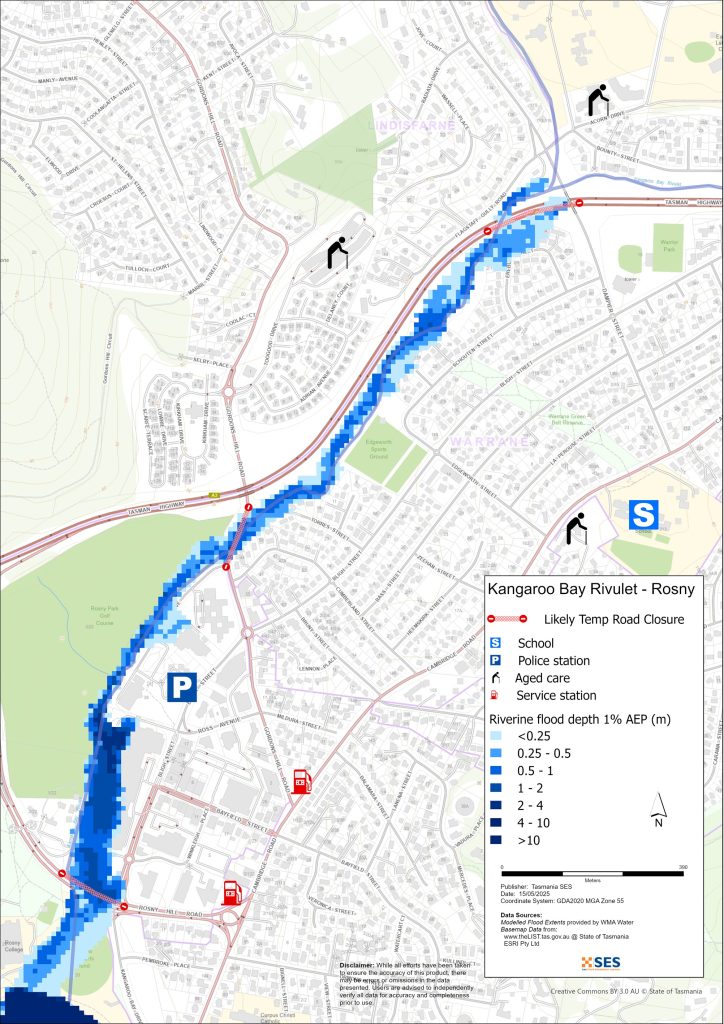
In Rosny Park and Warrane, a major flood in the Kangaroo Bay Rivulet could flood properties and roadways and the Eastlands Shopping Centre. In Geilston Bay, Flooding in Faggs Gully Creek could cut
- Geilston Bay Road, and
- Geilston Creek Rd.
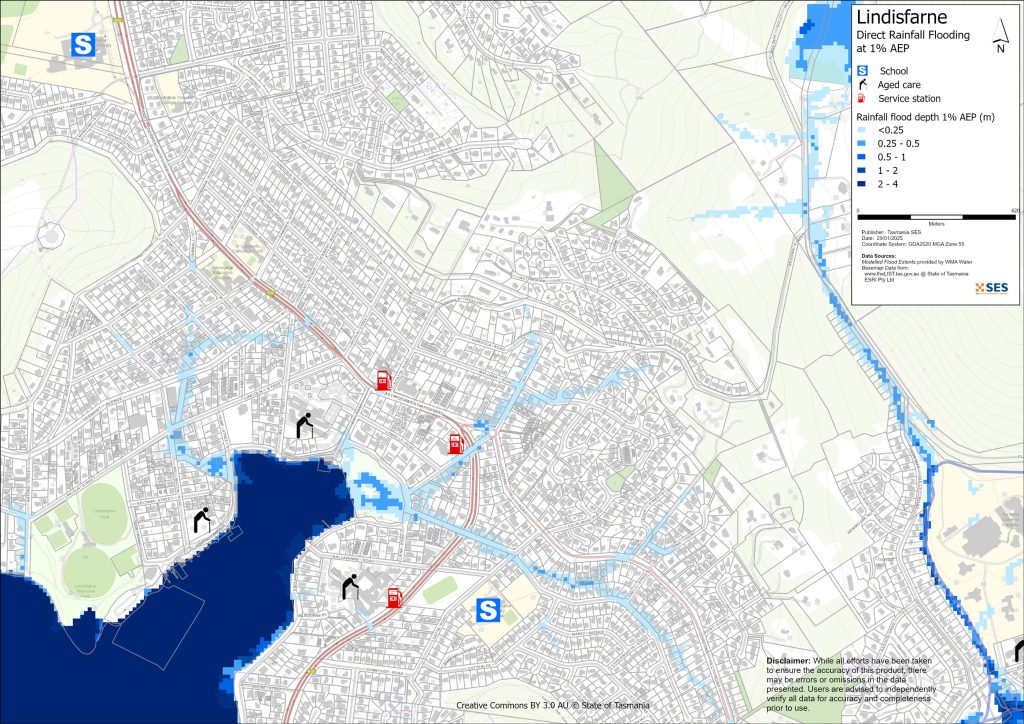
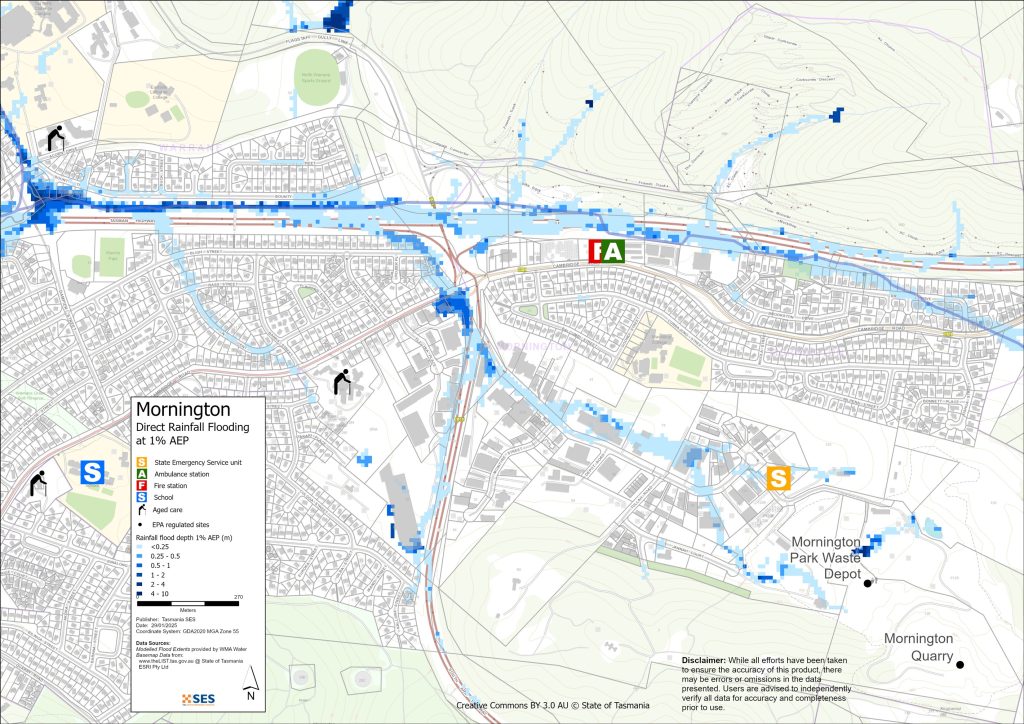
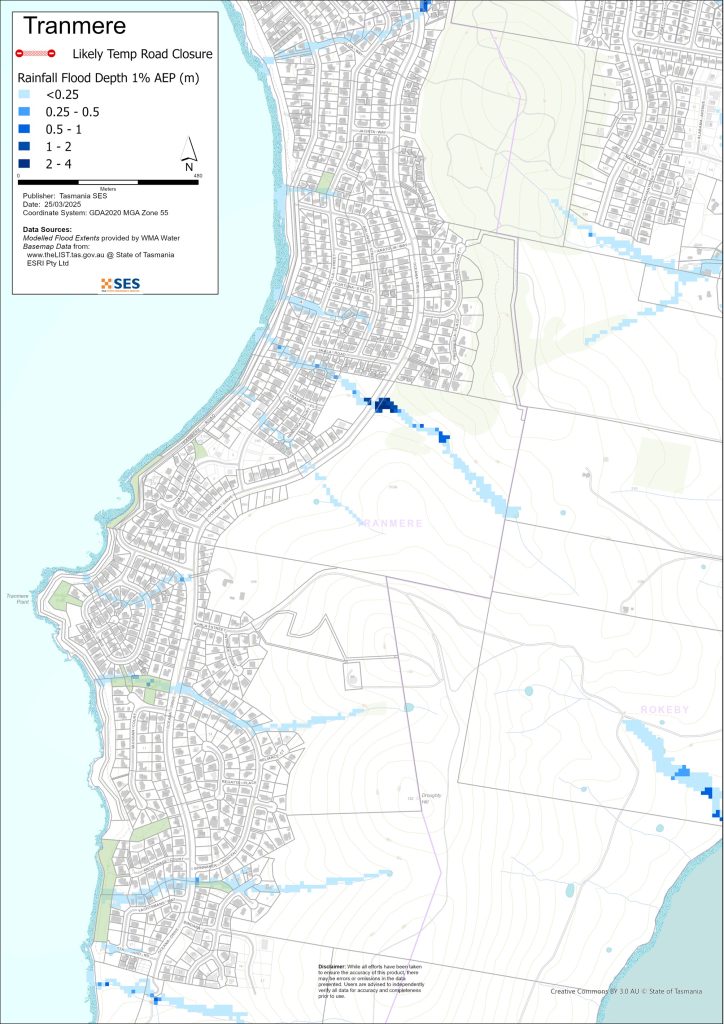
The maps in this guide show the level of flooding that has a 1% chance of happening any year from waterways and direct rainfall flooding. Intense rainfall can cause flash flooding.
คุณมีแนวโน้มที่จะประสบกับน้ำท่วมเช่นที่แสดงในแผนที่นี้ในช่วงชีวิตของคุณ ผู้อาศัยในรัฐแทสเมเนียจำเป็นต้องเตรียมตัวรับมือกับเหตุการณ์น้ำท่วมที่อาจไม่เกิดขึ้นบ่อยครั้ง รวมถึงน้ำท่วมระดับเล็กน้อยที่พวกเขาอาจเคยประสบมาแล้ว.
Even if your home is not inundated, you should prepare for isolation plus potential power and telecommunications outages. The Tasman Highway may be cut at Warrane and Mornington. Depending on where the rain falls and how heavy it is,
- South Arm Highway
- Rokeby Road, and
- ถนนเซาท์อาร์ม
may also be impassable, as well as minor roads and streets. Travel in the area is likely to be difficult or impossible until roads are clear. If you are safe at home or elsewhere, it is usually best you stay where you are until the flooding subsides, unless there is an emergency. If you need to evacuate, you should leave early, before flood waters rise.
ฟังวิทยุ ABC ท้องถิ่น 936AM สำหรับคำเตือนและคำแนะนำ.
คุณมีความเสี่ยงต่อน้ำท่วมหรือไม่
There have been flooding events in this area. In 2011 very heavy rain brought widespread flash flooding. Areas behind beach dunes, such as Bellerive Beach and Howrah Beach have often flooded, such as reported in The Mercury in 1953. There are not many recorded incidents of riverine flooding in this area.
For more detailed information visit www.ccc.tas.gov.au/living/your neighbourhood/flooding/
ฉันควรทำอย่างไร
- ตรวจสอบแผนที่เพื่อดูว่าบ้านหรือธุรกิจของคุณอาจเกิดน้ำท่วมหรือไม่.
- ประเมินบ้านหรือธุรกิจของคุณและเตรียมพร้อมเพื่อลดความเสียหายจากน้ำท่วมที่อาจเกิดขึ้น.
- ตรวจสอบว่าคุณสามารถเดินทางกลับบ้าน ที่ทำงาน หรือโรงเรียนได้อย่างปลอดภัยในช่วงน้ำท่วมหรือไม่.
- จัดทำแผนฉุกเฉินประจำบ้าน พิจารณาว่าคุณจำเป็นต้องอพยพก่อนเกิดน้ำท่วมหรือไม่ ดู เตรียมพร้อมรับมือเหตุฉุกเฉิน– คู่มือสำหรับบุคคลและครัวเรือนในการเตรียมพร้อมรับมือกับเหตุฉุกเฉิน.
- หากคุณเป็นผู้ผลิตขั้นปฐมภูมิ ชุดอุปกรณ์เตรียมความพร้อมรับมือน้ำท่วมสำหรับฟาร์ม ให้คำแนะนำเกี่ยวกับการเตรียมตัวรับมือกับอุทกภัยเพื่อช่วยปกป้องธุรกิจและสินค้าคงคลังของคุณ.
- หากคุณดำเนินธุรกิจหรือองค์กรอื่น ลองดูข้อมูลจากรัฐบาลแทสมาเนีย ธุรกิจที่พร้อมรับมือภาวะฉุกเฉิน เครื่องมือออนไลน์
- หากคุณอาจถูกกักตัวและคุณต้องเข้าถึงบริการ คุณอาจต้องอพยพออกไปก่อน.
- หากคุณกำลังตั้งแคมป์ในพื้นที่เสี่ยงต่อน้ำท่วม ควรติดตามข่าวสารอย่างใกล้ชิด และย้ายไปยังที่สูงทันทีหากคาดว่าจะมีน้ำท่วม.
น้ำท่วม เช่น ที่แสดงในแผนที่ หรืออาจจะหนักกว่านี้ จะเกิดขึ้นอีกครั้ง ไม่มีน้ำท่วมสองครั้งที่เหมือนกัน.
หากคุณอาศัยอยู่ในพื้นที่ลุ่มต่ำหรือใกล้ทางน้ำ บ้านของคุณอาจถูกน้ำท่วม แม้ว่าบ้านของคุณจะปลอดภัย คุณอาจต้องอ้อมไปรอบๆ บริเวณที่น้ำท่วม หรือทางเข้าบ้านของคุณอาจถูกตัดขาด ห้ามขับรถหรือเดินลุยเข้าไปในน้ำท่วมเด็ดขาด ถนนและสะพานอาจถูกพัดหายไปหรือไม่ปลอดภัย หลีกเลี่ยงการเดินทางในช่วงน้ำท่วม.
การรู้ว่าต้องทำอะไรสามารถช่วยชีวิตคุณและปกป้องทรัพย์สินของคุณได้ การมีแผนรับมือเหตุฉุกเฉินที่บ้านเป็นวิธีเตรียมพร้อมที่ดีที่สุดวิธีหนึ่ง กำหนดเหตุการณ์สภาพอากาศและปริมาณน้ำฝนที่จะกระตุ้นให้ลงมือปฏิบัติ.
กรมอุตุนิยมวิทยา พยากรณ์, การเตือน, และการสังเกตการณ์
สำนักออก ประกาศเตือนภัยน้ำท่วม, ประกาศเตือนสภาพอากาศรุนแรง และ/หรือ ประกาศเตือนพายุฝนฟ้าคะนองสำหรับฝนตกหนักที่อาจทำให้เกิดน้ำท่วมฉับพลัน เมื่อไรก็ตาม ฝนตกหนัก คาดว่าจะเกิดขึ้นในพื้นที่ ระยะเวลาระหว่างการเตือนภัยกับฝนตกหนักอาจแตกต่างกันไปตั้งแต่หนึ่งชั่วโมงถึง 24 ชั่วโมงขึ้นไป.
There are no river gauges or formal flood warnings for the waterways in this area.
การสังเกตปริมาณน้ำฝน ที่สนามบินโฮบาร์ต, โฮบาร์ต (ถนนเอลเลอสลี) และมาตรวัดน้ำฝนใกล้เคียงอื่นๆ สามารถบ่งชี้ความเสี่ยงน้ำท่วมได้ เนื่องจากมีเวลาเตือนภัยสั้นมาก จึงควรปฏิบัติตามคำเตือนของ BoM ล่วงหน้า แทนที่จะรอการแจ้งเตือนน้ำท่วมระหว่างฝนตก.
เดอะ เรดาร์ยอดเขาคูเนีย เป็นประโยชน์ที่จะทราบแบบเรียลไทม์ว่าฝนตกหนักอยู่ที่ไหน การประมาณปริมาณน้ำฝนจากเรดาร์ยังสามารถเติมเต็มช่องว่างในพื้นที่ที่ไม่มีสถานีวัดปริมาณน้ำฝนได้.
ทำความเข้าใจคำเตือนและข้อมูลสำคัญ
เฝ้าระวังสิ่งที่เกิดขึ้นรอบตัวคุณ ตรวจสอบพยากรณ์อากาศ การสังเกตการณ์ และคำเตือนเป็นประจำ.
 |
คำแนะนำ (สีเหลือง): มีเหตุการณ์เกิดขึ้น ยังไม่มีอันตรายใดๆ โปรดติดตามความคืบหน้า เผื่อสถานการณ์เปลี่ยนแปลง. |
 |
ดูและดำเนินการ (สีส้ม): ระดับภัยคุกคามสูงขึ้น สภาพการณ์กำลังเปลี่ยนแปลงและคุณต้องเริ่มดำเนินการทันทีเพื่อปกป้องตัวเองและครอบครัว |
 |
คำเตือนฉุกเฉิน (สีแดง): คำเตือนฉุกเฉินคือระดับการเตือนภัยสูงสุด คุณอาจตกอยู่ในอันตรายและต้องดำเนินการทันที ความล่าช้าใดๆ ในตอนนี้จะทำให้ชีวิตของคุณตกอยู่ในความเสี่ยง. |
 |
อัปเดตชุมชน (สีน้ำเงิน): ข้อมูลและการอัปเดตเฉพาะสำหรับชุมชนที่ได้รับผลกระทบเกี่ยวกับเหตุการณ์หรืออุบัติการณ์เฉพาะ. |
 |
เหตุการณ์ (สีขาว): เหตุการณ์คือการเกิดขึ้นครั้งแรกของเหตุการณ์ก่อนที่จะกลายเป็นสัญญาณเตือนภัยฉุกเฉิน ทันทีที่ได้รับรายงานเหตุการณ์ TasALERT จะเผยแพร่ข้อมูลพื้นฐานรวมถึงประเภทและสถานที่เกิดเหตุ. |
ระดับน้ำท่วม
While no two floods are the same, the following describes what you can expect at different flood levels around the area. Even if your property is not flooded, you need to think about access. Different levels of rainfall can cause flooding depending on its intensity, duration, how wet the ground is beforehand and where the rain falls.
น้ำท่วมเล็กน้อย
A minor flood can inundate low lying parkland, gardens, orchards and paddocks. Stock and equipment should be moved. There may be some flooding across low-lying minor roads. Stormwater systems may block and cause isolated areas of flooding.
น้ำท่วมปานกลาง
There is more extensive flooding of streets and parks and some buildings may be impacted to above floor height. Some properties may be isolated for a few hours as minor roads become flooded. The carpark of the Eastlands Shopping Centre may begin to flood, and properties and sports fields along Kangaroo Bay Rivulet may flood.
Near Bellerive Beach and Howrah Beach, flash flooding may occur, especially at high tide.
น้ำท่วมใหญ่
When major flooding occurs, extensive urban and rural areas are inundated. Many buildings – houses, businesses and facilities – may be affected above floor level, major traffic routes will be closed and areas will be isolated.
Major flooding in this area could include:
- In Warrane and Rosny Park, the Kangaroo Bay Rivulet would flood nearby properties, the Eastlands Shopping Centre and the sports facilities south of Rosny Hill Road
- In Bellerive, and to a lesser extent Howrah, properties close to the beach would be flooded if the rain falls directly on these areas
- Geilston Bay Rd, Rosny Hill Rd and parts of the Tasman Highway would flood and impassable
- Other locations may flood depending on where the rain falls and how heavy it is.
ไปที่ TasALERT.com หรือฟังวิทยุ ABC ท้องถิ่นสำหรับข้อมูลและคำแนะนำที่ละเอียดและเป็นปัจจุบันในช่วงที่มีฝนตกหนัก.
รู้ความเสี่ยงของคุณ เตรียมพร้อม ลดความเสี่ยงเท่าที่ทำได้ เชื่อมต่อกับผู้อื่น ตื่นตัวเสมอ และดำเนินการอย่างปลอดภัย.
ก่อนน้ำท่วม
เตรียมพร้อมรับมือเหตุฉุกเฉิน – คู่มือสำหรับบุคคลและครัวเรือนในการเตรียมพร้อมรับมือกับเหตุฉุกเฉิน.
1. รู้จักความเสี่ยงของคุณ
น้ำท่วมมักเกิดขึ้นในแทสเมเนียและอาจก่อให้เกิดความเสียหายในวงกว้างและรุนแรง ในช่วง 200 ปีที่ผ่านมา มีผู้เสียชีวิตจากเหตุน้ำท่วมในแทสเมเนีย 78 ราย คู่มือนี้จัดทำขึ้นเพื่อช่วยให้คุณเข้าใจเกี่ยวกับความเสี่ยงจากน้ำท่วมในพื้นที่ของคุณ.
2. เตรียมบ้านของคุณ
เตรียมแผนฉุกเฉินที่ครอบคลุมพายุและน้ำท่วม
การคิดถึงสิ่งที่คุณจะทำในระหว่างพายุหรือน้ำท่วม หมายถึงคุณมีความพร้อมมากขึ้น และทุกคนจะปลอดภัยยิ่งขึ้น จัดทำแผนฉุกเฉินที่ทุกคนในครัวเรือนของคุณเข้าใจ มีรายการตรวจสอบเพื่อช่วยให้คุณคิดถึงแผนของคุณ – ดู เตรียมพร้อมรับมือเหตุฉุกเฉิน – คู่มือสำหรับบุคคลและครัวเรือนในการเตรียมพร้อมรับมือกับเหตุฉุกเฉิน.
ตรวจสอบแผนของคุณอย่างสม่ำเสมอ และทดสอบโดยสมาชิกทุกคนในครอบครัวลองนึกถึงสถานการณ์น้ำท่วมที่อาจส่งผลกระทบต่อครอบครัวของคุณ.
เตรียมชุดอุปกรณ์ฉุกเฉิน
พร้อมไป
- วิทยุไฟฉายใช้แบตเตอรี่ พร้อมแบตเตอรี่สำรอง
- ข้อมูลสำคัญ เช่น แผนฉุกเฉินของคุณ
- รายการเบอร์โทรศัพท์ฉุกเฉิน
- อาหารและน้ำ
- ชุดปฐมพยาบาล
- ถุงมือยาง หรือหนังที่แข็งแรง
จัดกระเป๋าเมื่อจำเป็น
- เสื้อผ้าที่อบอุ่น รองเท้าที่ทนทาน หรือรองเท้าบูท
- ยา แว่นตา หรือสิ่งของจำเป็นอื่นๆ
- โทรศัพท์มือถือและที่ชาร์จโทรศัพท์
- อาหารสัตว์เลี้ยงและสิ่งอื่น ๆ ที่พวกเขาต้องการ
- รูปถ่ายและของที่ระลึกพิเศษ
- เงิน
- เอกสารสำคัญ ตัวอย่างเช่น
-
- เอกสารประกัน
-
- หนังสือเดินทางและ
-
- สูติบัตร
ทดสอบแบตเตอรี่วิทยุและไฟฉายเป็นประจำ.
3. ลดความเสี่ยงจากน้ำท่วมในบริเวณที่คุณสามารถทำได้
- คำนึงถึงพายุ น้ำท่วม และอันตรายอื่นๆ เมื่อซื้อ บำรุงรักษา หรือพัฒนาอสังหาริมทรัพย์.
- ตัดแต่งหรือโค่นต้นไม้และกิ่งก้านที่ยื่นเข้ามาเหนือบ้าน ธุรกิจ หรือใกล้สายไฟฟ้าบนทรัพย์สินของคุณ.
- รักษารางน้ำและท่อระบายน้ำของคุณให้โล่ง.
4. ติดต่อกับผู้อื่น
ทำความรู้จักเพื่อนบ้านและมีส่วนร่วมในชุมชนของคุณ ชุมชนที่มีความเชื่อมโยงกันคือชุมชนที่ปลอดภัยและมีความยืดหยุ่นมากกว่าในยามฉุกเฉิน และสามารถช่วยให้ทุกคนฟื้นตัวได้ดีขึ้นหลังจากนั้น ตรวจสอบให้แน่ใจว่าครอบครัวและเพื่อนบ้านปลอดภัยและรับทราบถึงสิ่งที่เกิดขึ้น.
ระหว่าง
5. ติดตามข้อมูลให้เป็นปัจจุบันอยู่เสมอ
เฝ้าระวังสิ่งที่เกิดขึ้นรอบตัวคุณ ตรวจสอบพยากรณ์อากาศ การสังเกตการณ์ และคำเตือนเป็นประจำ.
- เดอะ กรมอุตุนิยมวิทยา เว็บไซต์.
6. ปฏิบัติตัวอย่างปลอดภัย
- ดูแลเด็ก.
- เตรียมพร้อมรับมือการหยุดชะงักที่เป็นไปได้ของไฟฟ้า น้ำ หรืออินเทอร์เน็ต.
- ตรวจสอบชุดฉุกเฉินของคุณให้พร้อมใช้งาน.
- หลีกเลี่ยงพื้นที่ที่ถูกน้ำท่วม เช่น ท่อระบายน้ำ. ไม่ เดิน เล่น ขี่ หรือขับรถในน้ำท่วม คุณไม่สามารถมองเห็นสิ่งที่อยู่ใต้น้ำเสมอไป หรือน้ำมีความลึกหรือไหลเร็วเท่าใด ก็ตามเป็นเรื่องง่ายที่จะถูกพัดพาไปและจมน้ำในน้ำที่ไหลเร็วเพียง 20 ซม. น้ำท่วมอาจเป็นอันตรายได้.
เมื่อบ้านของคุณอาจถูกน้ำท่วม
- เก็บของใช้ในครัวเรือนไว้ในที่สูงเพื่อลดความเสียหายที่อาจเกิดขึ้น.
- ปิดไฟฟ้าและแก๊สหากสามารถทำได้อย่างปลอดภัย.
- วิธีที่ดีในการหยุดน้ำเสียไหลย้อนกลับเข้าบ้านของคุณคือการนำกระสอบทรายใส่ในถุงพลาสติก แล้วใช้กระสอบทรายเหล่านั้นอุดโถส้วมและปิดท่อระบายน้ำและอ่างล้างจาน.
- รีบออกไปก่อนที่คุณจะสามารถออกไปได้อย่างปลอดภัย.
หากคุณจำเป็นต้องอพยพ
- ปฏิบัติตามคำแนะนำจาก SES / ตำรวจแทสเมเนีย.
- นำชุดฉุกเฉินของคุณไปด้วย.
- ไปหาเพื่อนหรือญาติในที่ปลอดภัยกว่า หรือศูนย์พักพิง.
- บอกให้คนอื่นรู้ว่าคุณไปที่ไหน.
ดูแลสัตว์เลี้ยงของคุณ
คุณมีหน้าที่รับผิดชอบสัตว์เลี้ยงของคุณในยามฉุกเฉิน หากคุณมีสัตว์เลี้ยงและสัตว์อื่นๆ จะทำให้คุณต้องใช้เวลาอพยพนานขึ้นในยามเกิดน้ำท่วมหรือเหตุฉุกเฉินอื่นๆ ให้ย้ายปศุสัตว์ออกจากพื้นที่เสี่ยงต่อน้ำท่วมก่อนที่ระดับน้ำจะสูงขึ้น สำหรับข้อมูลเพิ่มเติม โปรดดู
หลีกเลี่ยงการเดินทางในช่วงที่มีพายุและหลังพายุ
- อย่าไปชมทิวทัศน์ จุดสนใจของนักท่องเที่ยวทำให้บริการฉุกเฉินล่าช้าและก่อให้เกิดอุบัติเหตุ.
- ระวังอันตรายต่างๆ เช่น
-
- น้ำท่วมถนน
-
- สายไฟฟ้าที่เสียหาย
-
- ดินถล่ม
-
- ถนนชำรุด
-
- ต้นไม้ล้มหรือหลังคาเหล็ก.
- ห้ามขับรถฝ่ากระแสน้ำท่วมโดยเด็ดขาด เหตุการณ์เสียชีวิตและต้องได้รับการช่วยเหลือจากน้ำท่วมส่วนใหญ่เกิดจากผู้ขับขี่พยายามขับรถฝ่ากระแสน้ำท่วม.
- ขับรถช้าๆ และเปิดไฟหน้ารถบนถนนที่ไม่อยู่ในบริเวณน้ำท่วม.
หลังจาก
- โปรดคอยรับฟังข่าวสารล่าสุดของ ABC Local Radio การเปิดถนนอีกครั้ง การประชุมชุมชน และอื่นๆ.
- หากท่านออกจากบ้านแล้ว ห้ามกลับเข้าบ้านจนกว่า SES หรือตำรวจแทสเมเนียจะแจ้งว่าปลอดภัย.
- ระมัดระวังอันตรายบนท้องถนน เช่น โคลนหรือเศษขยะบนถนน ถนน/สะพานที่ชำรุด และเจ้าหน้าที่ที่กำลังทำงานทำความสะอาดและซ่อมแซม.
หากบ้านของคุณได้รับความเสียหาย
- อยู่ในระดับพื้นดินขณะตรวจสอบความเสียหาย ระวังต้นไม้ที่โค่นล้ม กระจกแตก หลังคาหลุดลุ่ย หรืออันตรายอื่นๆ.
- สวมรองเท้าบูท ถุงมือ และเสื้อผ้าป้องกันที่แข็งแรง.
- ใช้ไฟฉาย ห้ามใช้ไม้ขีดไฟหรือเทียนไขภายในอาคารที่ถูกน้ำท่วม.
- ต้มน้ำดื่มทุกครั้งจนกว่าจะได้รับแจ้งว่าน้ำประปาปลอดภัยอีกครั้ง.
- ห้ามเปิดใช้งานจนกว่าจะได้รับการตรวจสอบความปลอดภัยโดยช่างไฟฟ้าหรือช่างแก๊สที่ได้รับใบอนุญาต.
- หากบ้านของคุณได้รับความเสียหาย และคุณต้องไปพักที่อื่น ให้นำชุดอุปกรณ์ฉุกเฉินและสัตว์เลี้ยงของคุณไปด้วย
- ถ่ายรูปความเสียหายที่พบ หากทำได้อย่างปลอดภัย แล้วติดต่อบริษัทประกันภัยของคุณ.
- ดูแลเด็ก.
- ตรวจสอบเพื่อนบ้านว่าโอเคหรือเปล่า.
สำหรับข้อมูลเพิ่มเติม ไปที่ www.ses.tas.gov.au
การรับทราบข้อมูลและข้อมูลเพิ่มเติม
ประกาศเตือนภัยปัจจุบัน – TasALERT.com
ผู้กระจายสัญญาณเหตุฉุกเฉิน สถานีวิทยุ ABC ในพื้นที่ของคุณ
โซเชียลมีเดียของ TASSES – facebook.com/sestasmania
การเตรียมพร้อมรับมือสถานการณ์น้ำท่วมฉุกเฉิน ses.tas.gov.au/flood-plan/
บริการถ่ายทอดแห่งชาติ (NRS) relayservice.gov.au
Local Emergency Broadcasters ABC 936AM
สภาเทศบาลเมืองแคลเรนซ์ ccc.tas.gov.au clarence@ccc.tas.gov.au 6217 9500

โปรดทราบ
แผนที่ในแผนงานนี้แสดงข้อมูลจากโครงการ Tasmanian Strategic Flood Mapping (TSFM) คุณสามารถสำรวจข้อมูลนี้ได้ด้วยชั้นข้อมูล Flood Hazard Data บน www.thelist.tas.gov.au.
สภาเทศบาลเมืองแคลเรนซ์มีการศึกษาเรื่องน้ำท่วมอย่างละเอียดสำหรับพื้นที่เหล่านี้ โปรดดู https://www.ccc.tas.gov.au/living/your neighbourhood/flooding/. ข้อมูล CCC ประกอบด้วยการคาดการณ์การเปลี่ยนแปลงสภาพภูมิอากาศ แสดงให้เห็นน้ำท่วมในความลึกที่ตื้นกว่า ดังนั้น ขอบเขตของน้ำท่วมจึงแตกต่างกันอย่างมาก และโดยทั่วไปจะใหญ่กว่าขอบเขต TSFM ที่แสดงในแผนที่ด้านล่าง ข้อมูลนี้อิงตามค่าเฉลี่ยปริมาณน้ำฝนในอดีต.
ข้อจำกัดความรับผิด
The maps show potential flooding risks from consistent levels of rainfall across catchments, such as a 1% Annual Exceedance Probability (AEP). In flooding events, rainfall is likely to be more inconsistent across a catchment, so these flood maps should be considered indicative only. The mapped areas of flood risk show higher probability of inundation. Other areas have lower probability of flooding, but in severe and rare events (rarer than 1%AEP), other lower areas may be also at risk of inundation.
ข้อมูลในคู่มือนี้เป็นข้อมูล ณ วันที่เผยแพร่ แม้ว่าจะได้ใช้ความพยายามอย่างเต็มที่เพื่อให้แน่ใจว่าข้อมูลที่นำเสนอมีความถูกต้องและเชื่อถือได้ แต่หน่วยบริการภาวะฉุกเฉินของรัฐจะไม่รับผิดชอบต่อข้อผิดพลาดหรือการละเว้นของข้อมูล โปรดดูมาตรฐาน ข้อความสงวนลิขสิทธิ์และข้อจำกัดความรับผิดชอบของรัฐบาลแทสเมเนีย สำหรับรายละเอียดเพิ่มเติม.