

Principles of Emergency Management
Dealing with emergencies is not a matter for governments alone. The shared roles and responsibilities for key non-government stakeholders, families and communities provide many benefits.
Emergency management in Australia is guided by a set of nationally recognised principles. These principles provide a consistent foundation for policy, planning and decision-making, and support resilient communities before, during and after emergencies.
These principles include the following approaches:
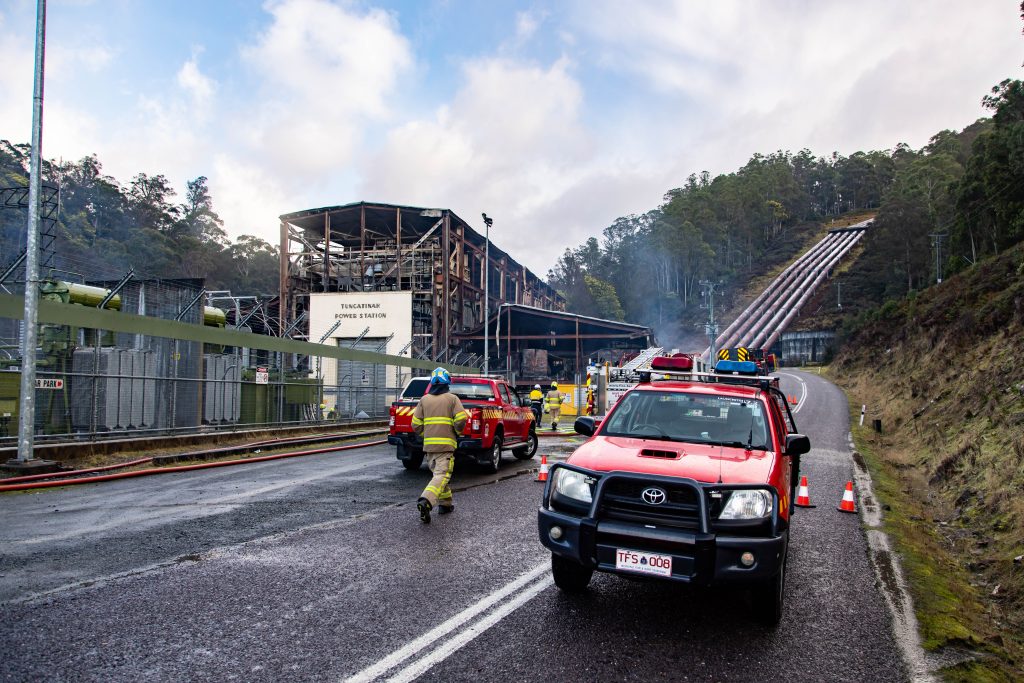
The protection and preservation of human life (including both communities and emergency service personnel) will be paramount over all other objectives and considerations.
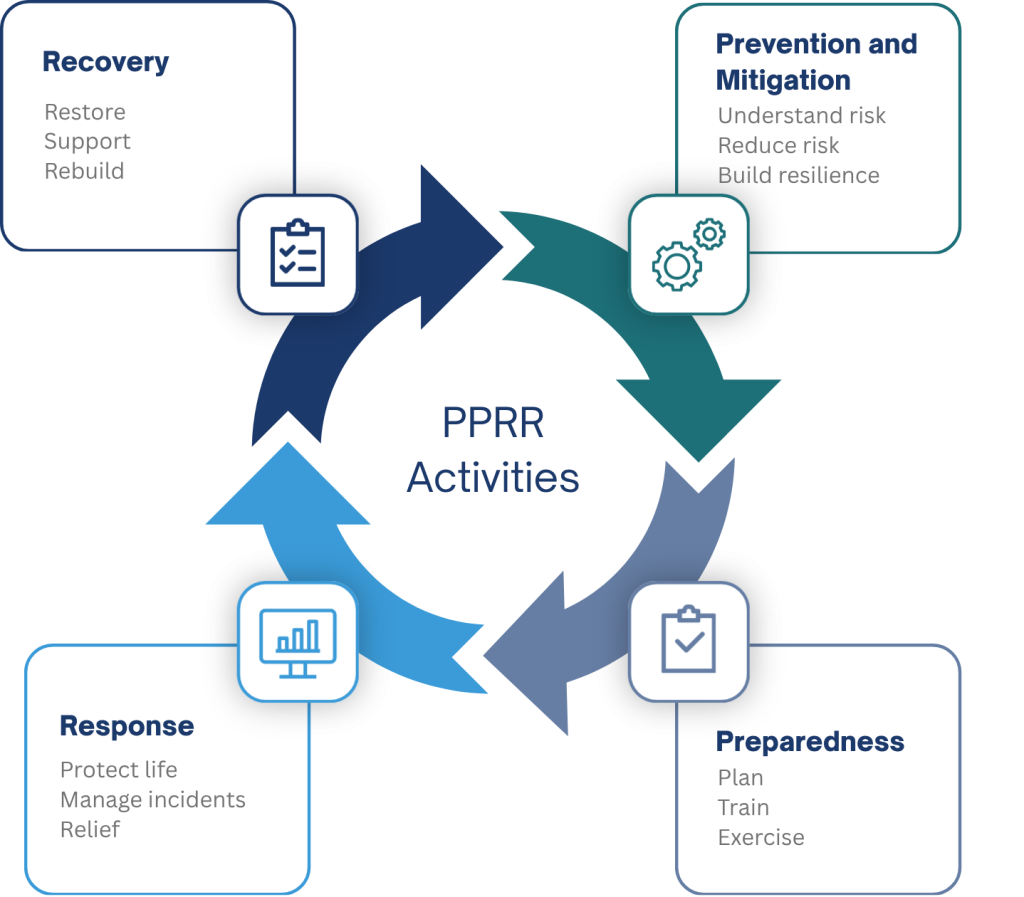
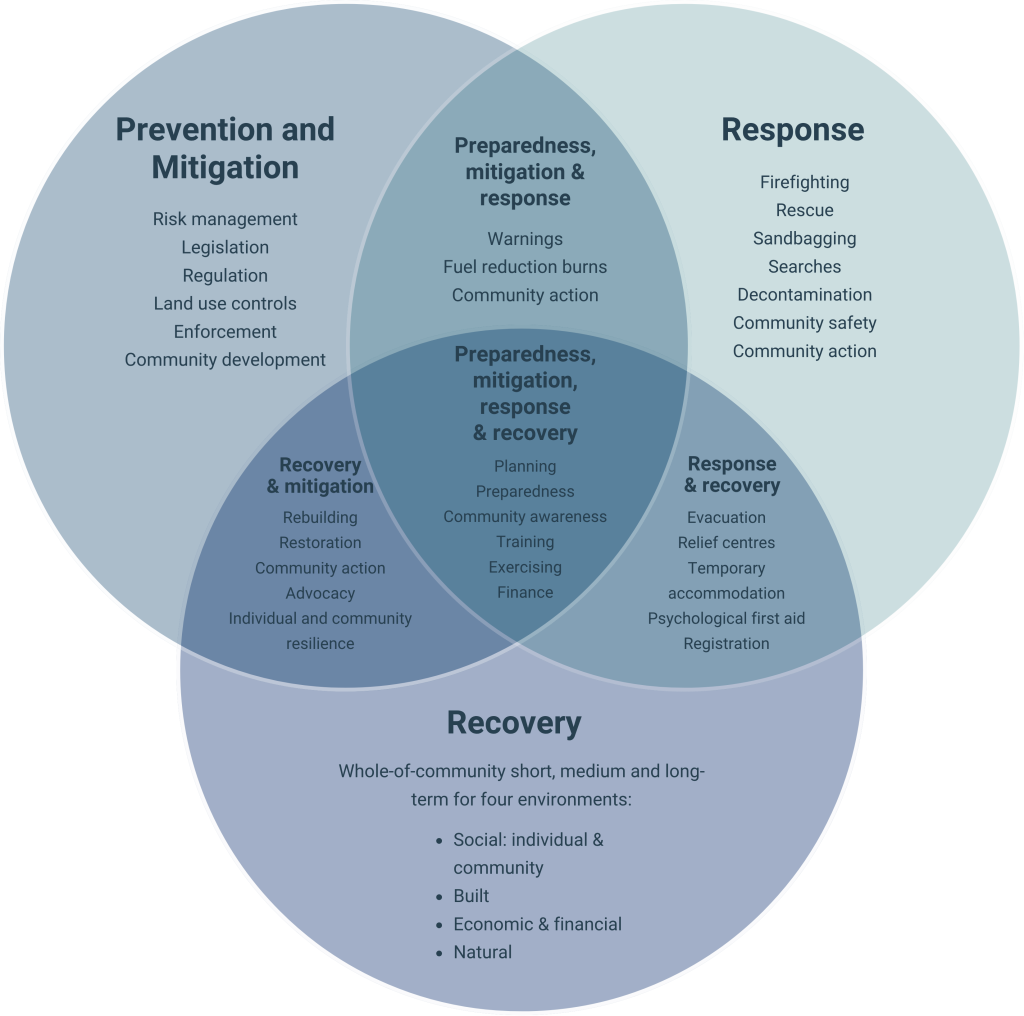
The development of emergency and disaster arrangements to embrace the phases of prevention, preparedness, response, and recovery (PPRR) across all hazards. These phases of emergency management are not necessarily sequential.
Relationships between emergency management stakeholders and communities are based on integrity, trust and mutual respect, building a team atmosphere and consensus. Planning and systems of work reflect common goals and all stakeholders work with a unified effort.
The bringing together of organisations and other resources to support emergency management response, relief and recovery. It involves the systematic acquisition and application of resources (organisational, human and equipment) in an emergency situation.
Emergency situations are constantly changing. Emergency management decisions may require initiative, creativity and innovation to adapt to new and rapidly emerging challenges. Emergency plans need to be agile to change and adapt to these new circumstances.
Emergency managers use sound risk management principles and processes in prioritising, allocating and monitoring resources to manage the risks from hazards.
Everyone understands their own responsibility in an emergency, and the responsibility of others. Communities and individuals understand the risk. This encourages all stakeholders to prevent, prepare for, and to plan for how they will safely respond to and recover from an emergency situation.
The ability of a system, community or society exposed to hazards to resist, absorb, accommodate, adapt to, transform and recover from the effects of a hazard in a timely and efficient manner, including through the preservation and restoration of its essential basic structures and functions through risk management.
Information is crucial to decision making and to the preservation of life. Emergency managers need to support common information systems and are responsible for providing and sharing clear, targeted and tailored information to those who need it, and to those at risk, to enable better decision making by all stakeholders.
Emergency Management efforts must be integrated across sectors, not progressed in silos, ensuring the engagement of the whole of governments, all relevant organisations and agencies, the private sector and the community.
All sectors continuously learn and innovate to improve practices and share lessons, data and knowledge so that future emergency management is better and the overall cost of impact of emergencies and disasters is reduced. Continuous monitoring, review and evaluation should examine the processes, timelines and outcomes of plans. Review informs communities and displays transparency and accountability. Review also enables facilitation of the adaptive change process with communities.
Comprehensive Approach
The National Comprehensive approach recognises the four phases of emergency management being:
| ❯ | Prevention reduces the likelihood or impact of emergencies. |
| ❯ | Preparedness builds capability to respond effectively to emergencies. |
| ❯ | Response involves actions taken during and immediately after an emergency. |
| ❯ | Recovery supports, restores and rebuilds communities following an emergency. |
The framework provides a structured approach to managing emergencies and reducing their impacts on people, communities, infrastructure, the economy and the environment.
Although often represented as a cycle, the four phases are interconnected and may occur simultaneously.
All-Hazards Approach
A ‘hazard’ means a place, structure, source or situation, that may potentially endanger, destroy or threaten to endanger or destroy human life, property or the environment.
Emergency management in Australia adopts an all-hazards approach. This means that most emergency management arrangements, plans and capabilities are designed to manage a wide range of hazards, rather than developing completely separate systems for each type of emergency.
Examples of hazards that may impact Australian communities include:
Natural Hazards
Human-Caused Hazards
Biological Hazards
Integrated and Coordinated Approach
| ❯ | An integrated and coordinated approach to emergency management recognises that no single agency, organisation or level of government can manage every aspect of an emergency. |
| ❯ | Emergencies often require the involvement of multiple organisations, including emergency services, government agencies, local government, non-government organisations, businesses and community groups. |
| ❯ | While each organisation has specific responsibilities, these responsibilities may overlap and require agencies to work together to achieve a common outcome. |
Actions taken by one organisation may influence the activities, responsibilities or decisions of others. Effective communication, coordination and collaboration are therefore essential to achieving a unified response and supporting community outcomes.
Resilience
Resilience is the ability of individuals, communities and organisations to withstand, adapt to and recover from emergencies and other disruptions. Building resilience involves understanding risk, strengthening capabilities and taking actions that help reduce the impact of emergencies before they occur.
Emergency management activities across prevention, preparedness, response and recovery all contribute to building resilience.
Shared Responsibility
Dealing with emergencies is not a matter for governments alone. Individuals, families and communities play a role in determining how well they are prepared for and safeguarded from emergencies, and their ability to recover from them.
A shared responsibility approach recognises that different sectors of the community contribute to emergency management in different ways:
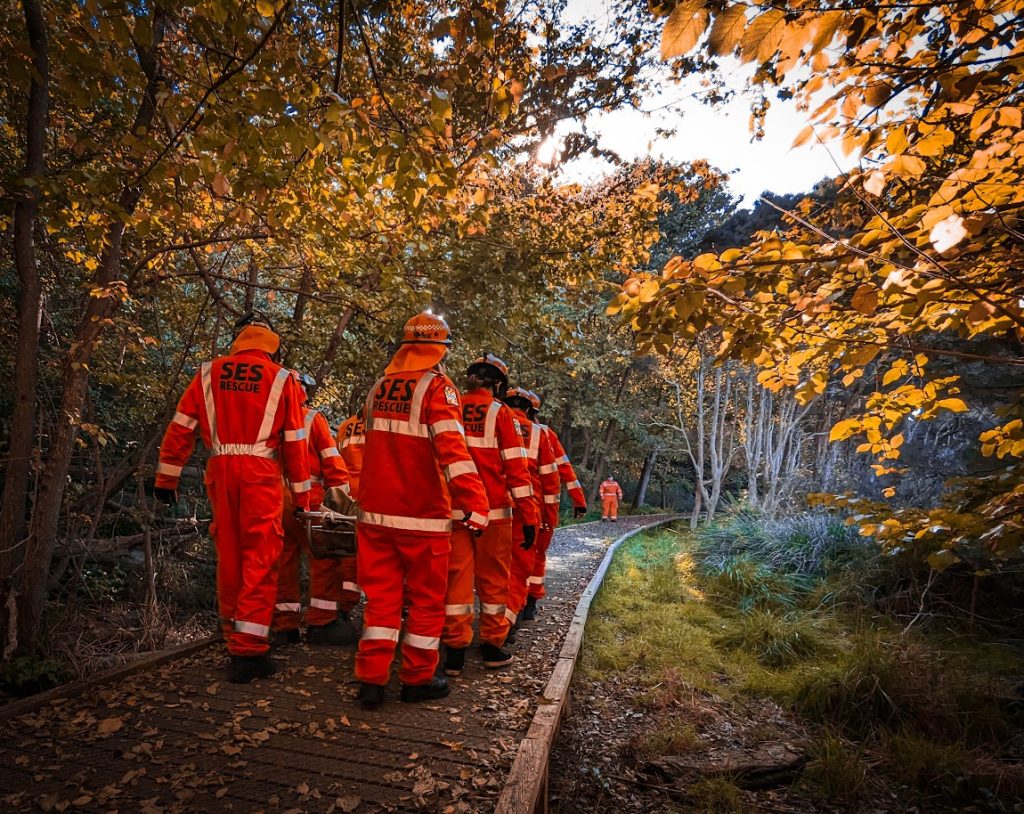
❯ Individuals and families take responsibility for understanding risks, preparing for emergencies, taking protective action and supporting their own recovery. ❯ Communities and community organisations contribute local knowledge, social connections and support networks. ❯ Businesses and industry help reduce risk, protect employees and customers, and support the continuity of essential goods and services. ❯ Non-government organisations provide specialist services, community support and recovery assistance, often working closely with governments. ❯ Emergency services provide specialist response capability, public information and warnings, and support community safety during emergencies. ❯ Governments provide leadership, legislation, policy, planning, coordination and resources to support emergency management activities.
In Practice
Throughout the year, council, emergency services, government organisations, local organisations and residents work together to identify risks, maintain critical infrastructure, maintain stormwater infrastructure and encourage household preparedness. These prevention and preparedness activities help reduce the likelihood and impact of severe weather.
When a severe storm impacts the community, emergency services, government agencies, community organisations, local organisations, council and residents work together to respond, protect people, share information, restore essential services and support those impacted.
In the weeks and months that follow, agencies and communities work together to recover, rebuild, support wellbeing and livelihoods and strengthen community resilience.
Lessons identified from the event are then used to improve plans, capability and risk reduction measures, helping the community to be better prepared for future emergencies.