
D’Entrecasteaux 洪水指南
沿著當特卡斯蒂索海峽(D'Entrecasteaux Channel)沿岸社區(包含 lunawani / 布魯尼島(Bruny Island))的河川、山洪暴發及海岸淹水資訊
版本 0.3b 社群意見徵求草案 – 電子郵件 ses@ses.tas.gov.au – 下載 PDF 版本

若要更詳細地查看地圖,, 查看塔斯馬尼亞策略性洪水圖.
暴風雨經常影響恩特卡斯托河道(D’Entrecasteaux Channel)地區,帶來豪雨和破壞性強風。在強烈暴風雨期間,雨水徑流和山洪暴發會影響許多地區。易受河流氾濫(河川洪災)影響的地區有:
- 斯納格 (Snug) – 位於斯納格河 (Snug River) 以南、海峽公路 (Channel Hwy) 下游的低窪地區,主要靠近北部濱海大道 (Esplanade North)、派伯街 (Pybus St) 及吉利斯街 (Gillies St)
- 冒險灣 – 庫克船長溪附近。.
在這兩種情況下,當發生風暴潮且適逢滿潮時,淹水的可能性更高。.
該地區的所有水道都很短,因此河川水位計無法提供充分的預警。山洪暴發可能會影響:
- 低窪河流交叉處的道路,包括海峽公路(Channel Highway)在某些地方的短暫時間、桑德弗萊(Sandfly)附近的休恩公路(Huon Highway)以及桑德弗萊路(Sandfly Road)
- 位於Margate Margate溪或西北灣溪附近的6個物業
- 布魯尼島冒險灣庫克船長溪入海口附近的一些棚屋。.
部分物業可能會因道路積水而短暫與外界隔絕。雜物也可能被沖到路上,導致交通中斷的時間更長。.
有一些地勢較低的海岸地區面臨沿海淹水的風險。在滿潮時發生風暴期間,發生海岸洪水的可能性更高。風險最大的地區包括:
- 瑪蓋特德魯角濱海藝術中心與巴雷塔海濱地區
- 舒適的海濱
- 下斯納格 / 舊車站路,康寧漢姆
- 布魯尼島主路近大灣與地峽
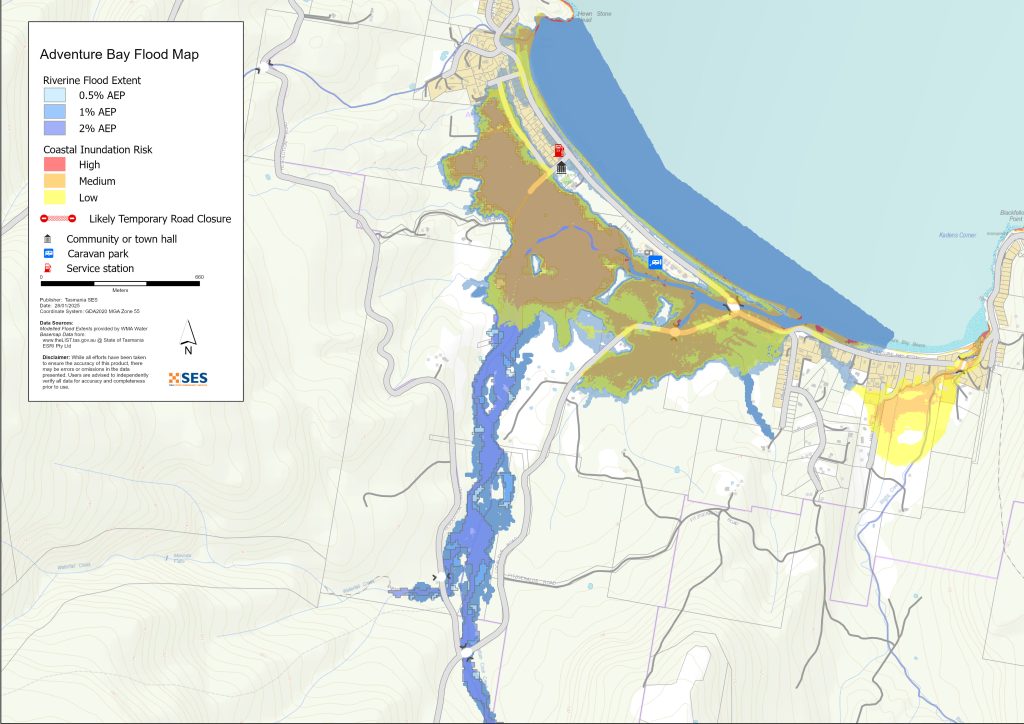
- 庫克船長溪附近的冒險灣
- 丹尼斯角內布拉斯加海灘(Dennes Point Nebraska Beach),以及大灣(Great Bay)和地峽(Isthmus)附近的布魯尼島主路(Bruny Island Main Road)的一些地區。.
海岸侵蝕也可能影響某些地區。這種情況在風暴或洪水事件期間更有可能發生。.
請參閱 塔斯馬尼亞策略性洪水地圖 要檢視更詳細的洪水圖。要檢查您的房產是否存在遭受海岸淹沒或侵蝕的風險,請參閱 alert.tas.gov.au/get-ready/risk-ready/. SES 目前正在將河流洪水圖加入 TasALERT 風險就緒平台中。.
本指南中的地圖顯示了河流泛濫或沿海淹水所造成的淹水程度,此類事件在任何一年內發生的機率至少為 1%(氣候資料截至 2016 年)。您在有生之年很可能經歷地圖上所示的這類淹水情況。 塔斯馬尼亞居民不僅需為可能經歷過的輕微洪水做好準備,更需為那些發生頻率較低的洪水事件做好準備。即使您的住家未遭淹沒,也應預先做好應對隔離狀態,以及可能發生的停電和通訊中斷的準備。視降雨位置及雨勢強弱而定,其他道路也可能無法通行。 在道路清理完畢之前,該地區的交通可能十分困難甚至完全無法通行。若您在家中或其他地方安全無虞,除非遇到緊急情況,否則通常最好留在原地,直到洪水退去為止。若您需要撤離,應趁洪水尚未上涨時盡早離開。.

請前往 tasalert.com 或收聽 ABC 當地廣播 936AM 以獲取警告與建議。.
您有洪水風險嗎?
除了史拿格河口(Snug river mouth)以及庫克船長溪(Captain Cook’s Creek)附近的冒險灣(Adventure Bay)之外,河流泛濫並不是海峽(the Channel)周圍大多數地區所擔憂的問題,然而這裡卻有著嚴重風暴帶來暴雨的悠久歷史。例如,造成雨水逕流和水災問題的嚴重風暴曾發生於 1872、1881、1954、1954、1960、1973、1983、1995、1996、2004、2005、2010、2011、2015 和 2018 年。.
我應該做什麼?
- 檢查地圖,看看您的住宅或企業是否可能遭受洪水侵襲。.
- 評估您的住家或公司,並做好準備以盡量減少潛在的洪水損害。.
- 檢查您是否能在洪水期間安全地抵達家中、工作地點或學校。.
- 準備一份居家緊急計畫。考慮是否需要在大水來臨前撤離。請參閱 為緊急情況做好準備– 為個人和家庭準備應急措施的指南。.
- 如果你是初級生產者, 農場防汛應急包 提供有關如何做好防洪準備的建議,以幫助保護您的企業和庫存。.
- 如果您經營企業或其他組織,請查看塔斯馬尼亞政府的 備災就緒企業 線上工具
- 如果你可能被隔離且必須取得服務,你可能需要提早撤離。.
- 如果你在容易發生洪水的地區露營,請確保隨時掌握最新資訊,並且在可能發生洪水時及早移往高處。.
像地圖所示的洪水,或更糟的洪水,將會再次發生。沒有兩次洪水是相同的。.
如果您居住在低窪地區或靠近水道,您的房屋可能會被淹沒。即使您的住所安全,您也可能需要繞過淹水地區,或者您的道路通行可能會被阻斷。切勿駕車進入或身處洪水之中。道路和橋樑可能會被沖毀或不安全。洪水期間請避免出行。.
知道該怎麼做可以拯救你的生命並保護你的財產。制定家庭緊急計畫是最好的準備方法之一。決定天氣和降雨的觸發條件,以便採取行動。.
中央氣象局預報、警報與觀測
當預期某地區會出現大雨時,氣象局會發布針對可能導致山洪暴發的大雨之洪水警報、惡劣天氣警報及/或雷雨警報。從發布警報到大雨發生之間的時間差,可以從一小時到二十四小時或更久不等。.
該地區的所有河流均無河川水位洪水警報——由於集水區較短,河川水位計的資訊無法提供足夠的預警時間。.
檢查 雨量觀測 在威靈頓山/庫納尼(Mt Wellington / kunanyi)、瑪格麗特(Margate)、登內斯角(Dennes Point)及其他附近的雨量計。鑑於預警時間非常短,最好根據氣象局(BoM)的預測警報採取行動,而不是等待降雨期間發出的任何洪水警報。.
這 庫尼亞山雷達 即時了解大雨落在哪裡是有幫助的。雷達降雨量估計也能填補沒有測量站的區域的數據空缺。.
了解警告和關鍵資訊
隨時留意周遭狀況。定期查看天氣預報、觀測數據和警報。.
- 這 氣象局網站.
 |
建議 (黃色): 已發生事件。目前沒有立即危險。請隨時更新最新情況,以防局勢變動。. |
 |
觀察與行動(橘色): 威脅等級升高。情勢正在改變,您現在就必須採取行動保護您和您的家人。 |
 |
緊急警告(紅色): 緊急警報為最高級別的警報。您可能身處危險之中,需要立即採取行動。任何延誤都可能危及您的生命。. |
 |
社群更新(藍色): 針對特定事件或事故,向受影響社群提供的具體資訊和最新消息。. |
 |
事件(白色): 事件是緊急警報發布前的初步發生。一旦事件被報告,TasALERT 就會發布基本資訊,包括事件的類型和地點。. |
洪水水位
雖然沒有哪兩次洪水是完全相同的,但以下內容描述了您在該地區不同洪水水位下可能會遇到的情況。即使您的房產沒有被淹沒,您也需要考慮出入的問題。根據降雨的強度、持續時間、之前的土壤濕潤程度以及降雨地點的不同,不同程度的降雨都可能引發洪水。在沿海地區,漲潮時更容易發生洪水。產生強降雨的天氣系統還可能引起風暴潮、沿海淹沒和海岸侵蝕。.
小範圍淹水
輕微淹水可能會影響
- 一些小型道路河流交叉口
- 河漫灘農地
- 河畔公園。沿海公園區域也可能在滿潮時受到影響。.
- 此等級的洪水,在任何一年中發生的機率約為 10% 或更高。.
中度洪水
一場中度洪水事件可能會淹沒河畔公園、地勢低窪的後院和街道。部分房屋和其他建築物可能會開始受到影響,尤其是
- 瑪格麗特附近的布魯克菲爾德以及瑪格麗特溪流沿岸的幾處房產
- Snug 河口附近的低窪地區
- 其他鄰近海岸及水道的低窪地區
這種程度的洪水,每年發生的機率約為 2-5%。.
雨水、供水及污水處理系統可能會受到影響。.
嚴重洪水
發生機率為 1% 的重大洪水可能影響:
- 斯納格河口周邊有許多房產
- 布魯尼島冒險灣庫克船長溪附近的一些物業
- 位於西北灣溪(North West Bay Rivulet)和馬蓋特溪(Margate Rivulet)沿岸的一些房產
- 這可能意味著海峽公路 (Channel Highway) 和布魯尼島主路 (Bruny Island Main Road) 的部分路段可能會短暫中斷。部分地區可能會與外界隔絕。.
- 在大潮時,可能還會有其他一些同樣面臨沿海淹水風險的地區,例如:
- 馬蓋特德魯角 / 海濱大道和巴雷塔
- 舒適的海濱,包括從橢圓形運動場(Oval)周邊到露營車公園的區域
- 下斯納格 / 科寧漢(近斯納格溪與舊車站路)
- 凱特林碼頭/渡輪路地區
- 伍德布里奇前濱
- 布魯尼島(Bruny Island)、丹尼斯角(Dennes Point)、內布拉斯加海灘(Nebraska Beach)沿線的多個地區
- 冒險灣,特別是庫克船長小溪周圍
- 布魯尼島主路(Bruny Island Main Road)靠近大灣(Great Bay)、地峽(the Isthmus)和阿洛納(Alonnah)的一些路段。.


請瀏覽 TasALERT.com 或收聽 ABC 當地廣播電台,以獲取強降雨事件期間詳細的最新資訊和建議。.
了解你的風險,做好準備,盡可能降低風險,與他人聯繫,保持警惕並安全行動。.
洪水之前
為緊急情況做好準備 – 為個人和家庭準備應急措施的指南。.
1. 認識你的風險
塔斯馬尼亞經常發生洪水,可能造成廣泛且嚴重的損害。在過去 200 年裡,塔斯馬尼亞有 78 人死於與洪水相關的事件。本指南旨在幫助您了解您所在地區的洪水風險。.
2. 準備您的家戶
制定包含風暴和洪水應變計畫
思考一下在風暴或洪水來襲時你會怎麼做,意味著你準備得更充分,每個人都會更安全。制定一個家庭中的每個人都理解的緊急計畫。有檢查表可以幫助你思考你的計畫——請參閱 為緊急情況做好準備 – 為個人和家庭準備應急措施的指南。.
定期檢查您的計劃,並讓家中的每個人都設想一次可能影響您家的洪水情況來進行測試。.
準備一個緊急救生包
準備好了
- 電池供電的收音機和手電筒,備用電池
- 重要資訊,例如您的緊急應變計畫
- 緊急電話號碼列表
- 食物和水
- 急救箱
- 橡膠手套或堅固的皮革手套
需要時打包
- 暖和的衣服、結實的鞋子或靴子
- 藥品、眼鏡或其他必需品
- 手機和充電器
- 寵物食品和他們需要的任何其他東西
- 照片和特別紀念品
- 錢
- 重要文件,例如
-
- 保險文件
-
- 護照與
-
- 出生證明
定期測試收音機和手電筒的電池。.
3. 在可能的情況下,降低您遭受洪水侵襲的風險
- 在購買、維護或開發房地產時,請考慮風暴、洪水和其他災害。.
- 修剪或移除您家中、商家或您家附近有電力線的樹木和樹枝。.
- 保持您的排水溝和排水管暢通。.
4. 與他人建立聯繫
認識您的鄰居並參與您的社區活動。一個互聯的社區在緊急情況下會更安全、更有韌性,並且能夠幫助每個人在事後更好地恢復。確認家人和鄰居的安全,並讓他們了解正在發生的情況。.
期間
5. 保持更新
隨時留意周遭狀況。定期查看天氣預報、觀測數據和警報。.
- 這 氣象局 網站.
6. 保持安全
- 監督兒童.
- 為可能的停電、停水或斷網做好準備。.
- 檢查您的緊急救助包是否已準備就緒。.
- 切勿靠近淹水區域,例如排水溝。. 永不 在洪水中有行走、玩耍、骑行或开车。你無法確定水下有什麼,或水有多深、流速有多快。20公分的湍急的洪水就很容易將人沖走並淹死。洪水可能很危險。.
您的房屋可能發生淹水時
- 將家居物品放在高處,以盡量減少潛在損壞。.
- 如果安全的話,請關閉水電和瓦斯。.
- 一種防止污水倒灌回屋內的好方法是將沙包放入塑膠袋中,然後用它們來堵塞馬桶、蓋住排水孔和水槽。.
- 趁你還能安全脫困時趕快離開。.
如果你需要疏散
- 請遵循 SES / 塔斯馬尼亞警方的建議。.
- 帶上你的緊急求生包。.
- 前往朋友或家人較安全的地方,或前往疏散中心。.
- 讓別人知道你去了哪裡。.
照顧好你的動物
在緊急情況下,您需要對您的動物負責。如果您有寵物或其他動物,在發生洪水或其他緊急情況時,您需要花費更多時間才能撤離。請在洪水可能上漲之前很早就將牲畜從易受洪水侵襲的地區轉移走。欲了解更多資訊,請參見
請避免在風暴期間和風暴之後旅行
- 不要去觀光。觀光客會延誤緊急服務並造成事故。.
- 注意危險,例如
-
- 路面积水
-
- 損壞的電力線
-
- 山崩
-
- 損壞的道路
-
- 倒下的樹木或屋頂鐵片。.
- 切勿駕車通過淹水區域。洪水中的大多數死亡和救援事件都與駕車通過淹水區域有關。.
- 緩慢行駛,並在不受洪水影響的道路上打開頭燈。.
之後
- 請持續收聽 ABC 地方電台的最新消息、道路重新開放、社區會議等資訊。.
- 如果您離開家,請勿在聯邦緊急事務局 (SES) 或塔斯馬尼亞警方告知您安全之前回家。.
- 注意道路上的危險,例如路面上的泥沙或碎屑、道路/橋樑損壞以及正在進行清理和修復工作的工人。.
如果您的房屋已受損
- 在檢查損壞時,請待在地面。小心掉落的樹木、碎玻璃、鬆動的屋頂或其它危險物品。.
- 穿著堅固的靴子、手套和防護服。.
- 請使用手電筒,切勿在受洪水影響的建築物內使用火柴或蠟燭。.
- 將所有飲用水煮沸,直到被告知自來水再次安全為止。.
- 切勿開啟,除非已由持牌電工或氣體技師進行安全檢測。.
- 如果您的房屋受損,需要暫時住在其他地方,請攜帶您的緊急應變包和寵物一同前往。
- 如安全,請拍攝任何損壞的照片,並聯繫您的保險公司。.
- 監督兒童.
- 檢查鄰居是否安好。.
如需更多資訊,請前往 www.ses.tas.gov.au
保持獲取最新資訊及更多詳盡資料
緊急廣播公司 – 您當地的 ABC 電台
TASSES 社交媒體 – facebook.com/sestasmania
為洪水緊急情況做準備 ses.tas.gov.au/flood-plan/
國家轉接服務 (NRS) relayservice.gov.au
金布羅市議會 www.kingborough.tas.gov.au 6211 8200
本地緊急廣播公司 ABC 936AM

免責聲明
The maps show potential flooding risks from consistent levels of rainfall across catchments, such as a 1% Annual Exceedance Probability (AEP). In flooding events, rainfall is likely to be more inconsistent across a catchment, so these flood maps should be considered indicative only. The mapped areas of flood risk show higher probability of inundation. Other areas have lower probability of flooding, but in severe and rare events (rarer than 1%AEP), other lower areas may be also at risk of inundation.
本指南中的資訊在出版時是最新資料。儘管已盡一切努力確保所呈現數據的有效性和準確性,但州緊急服務部門不對數據錯誤或遺漏負責。請參閱標準 塔斯馬尼亞州政府的版權與免責聲明 更多詳情.