
 Mỹ
Module Overview
This module introduces Tasmania’s emergency management arrangements and explains how emergency management is governed, coordinated and delivered across the State.
It provides an overview of the legislative, governance and operational arrangements that support prevention, preparedness, response and recovery activities in Tasmania.
Learning Outcomes
- Describe the key components of the Tasmanian Emergency Management Arrangements (TEMA)
- Cấu trúc Quản trị và Quản lý Ứng phó Khẩn cấp tại Tasmania
- Identify the key roles and responsibilities in emergency management in Tasmania.
Module Summary
Duration 2.5 hours
Prerequisites
- Module 1, or;
- Background in Emergency Management
Topics Covered
- State Emergency Management Framework
- Governance and Responsibilities
- Prevention and Mitigation
- Sự sẵn sàng
- Phản hồi
- Phục hồi
The Tasmanian Context
Tasmania’s emergency management arrangements are shaped by Tasmania’s geography, population attributes, natural environment and risk profile.
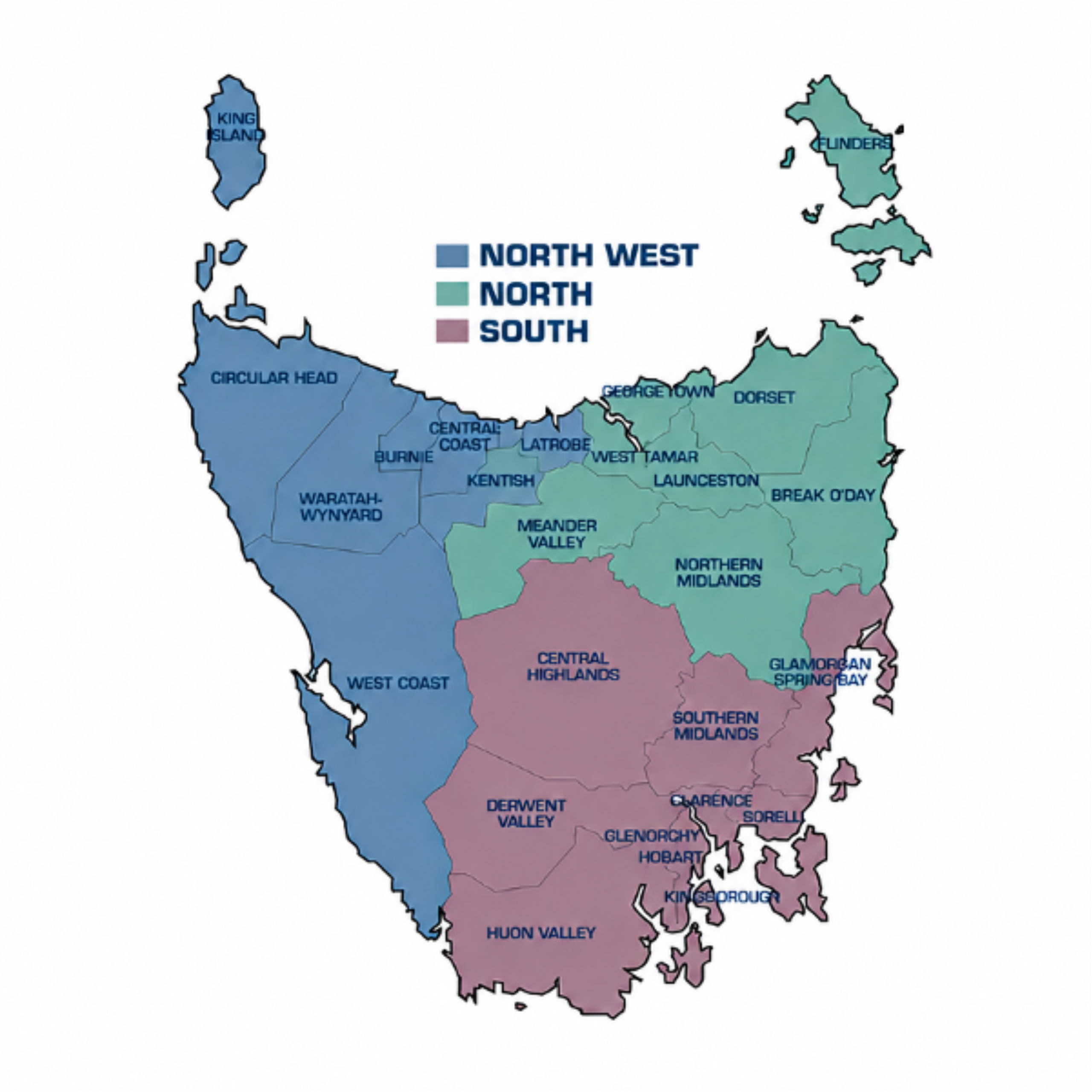
Tasmania’s Regions and Municipal Areas
| ❯ | 3 emergency management regions (Northwest, North and South) |
| ❯ | 29 municipal areas |
Tasmania’s emergency management arrangements are shaped by a range of demographic, geographic and environmental factors, including:
| ❯ | Tasmania has around 570,000 residents spread across a large geographic area. |
| ❯ | Tasmania has a relatively older population compared with many Australian jurisdictions. |
| ❯ | Many communities are located in regional, rural and remote locations. |
| ❯ | Tasmania receives millions of visitors each year. |
| ❯ | Nearly half the State is protected through reserves, national parks and World Heritage areas. |
| ❯ | Tasmania experiences a range of natural, technological, biosecurity and human-caused hazards, including bushfire, flood, storms, heatwaves, public health emergencies and biosecurity threats. |
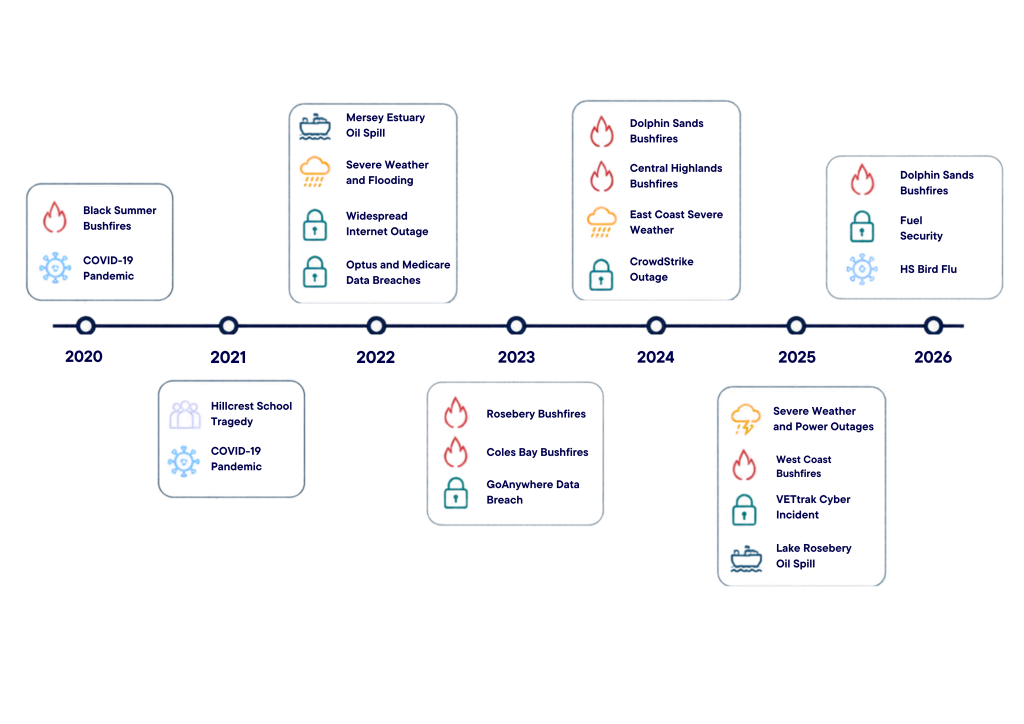
Disasters in Tasmania since 2020
It is important to understand the diverse range of emergencies and disasters that can affect Tasmania. The timeline below highlights significant emergencies and disasters that have affected Tasmania since 2020.
Tasmania’s Emergency Management Approach
Tasmania’s emergency management arrangements are designed to address a diverse range of hazards and risks through a coordinated, all-hazards and resilience-based approach. Tasmania adopts:
| ❯ | All-hazards approach |
| ❯ | Comprehensive approach |
| ❯ | Risk-based approach |
| ❯ | Resilience-based approach |
| ❯ | Integrated and coordinated approach |
| ❯ | Shared responsibility approach |
A Collaborative Approach
Arrangements are underpinned by partnerships between the Australian, state and local governments; businesses and industry; non-government organisations; community groups; emergency management and volunteer organisations; and communities. These partnerships aim to:
| ❯ | Recognise the primacy of life. |
| ❯ | Build whole-of-community resilience to disasters by minimising vulnerability to risks associated with hazards. |
| ❯ | Protect property and the environment. |
| ❯ | Recognise the need to build disaster resilience into business and infrastructure. |
| ❯ | Minimise adverse social and economic impacts during and after emergencies. |
| ❯ | Tạo điều kiện thuận lợi cho phục hồi, khôi phục, tái hòa nhập và tái thiết. |
These principles underpin the Tasmanian Emergency Management Arrangements and are complemented by the Tasmanian Disaster Resilience Strategy, which provides a statewide roadmap for strengthening resilience and reducing disaster risk.