


Module Overview
This module introduces Tasmania’s emergency management arrangements and explains how emergency management is governed, coordinated and delivered across the State.
It provides an overview of the legislative, governance and operational arrangements that support prevention, preparedness, response and recovery activities in Tasmania.
Learning Outcomes
- Describe the key components of the Tasmanian Emergency Management Arrangements (TEMA)
- 국제 표준에 따라 재난 관리는 주로 정부, 민간 부문 및 지역 사회의 참여를 통해 위험 감소, 대비, 대응 및 복구라는 네 가지 주요 활동으로 구성됩니다. **1. Governance and Management Structure (거버넌스 및 관리 구조)** * **Tasmania's Emergency Management Act 2013 (2013년 타즈매니아 비상 관리법)**: 이 법은 타즈매니아의 비상 관리 프레임워크의 법적 기반을 제공합니다. 이 법은 비상 사태를 선포하고, 비상 관리 조직의 권한과 책임을 정의하며, 당국의 책무를 규정합니다. * **State Emergency Management Committee (주 비상 관리 위원회)**: 위원회는 주 재난 관리 프레임워크를 감독하는 주급 기관입니다. 위원회는 비상 사태 대비를 위한 계획, 정책 및 전략을 개발하는 데 책임이 있으며, 부서 및 기관이 법률에 명시된 의무를 이행하도록 합니다. * **Department of Police, Fire and Emergency Management (경찰·소방·비상 관리부)**: 이 부서는 타즈매니아의 비상 관리 활동의 주요 조율자입니다. 여기에는 비상 관리 계획 개발, 훈련 및 연습 실시, 재난 발생 시 대응 노력 지휘가 포함됩니다. * **Local Government (지방 정부)**: 주정부와 마찬가지로 지방 정부는 해당 관할 구역 내에서의 비상 관리 계획 및 조정에 중추적인 역할을 합니다. 지방 정부는 해당 지역의 재난 위험에 대한 비상 계획을 개발하고, 지역 사회 수준에서 대비 및 대응 노력을 지원해야 합니다. * **Emergency Service Organisations (비상 서비스 조직)**: 여기에는 Tasmania Police(타즈매니아 경찰), Tasmania Fire Service(타즈매니아 소방 서비스), Tasmania Ambulance Service(타즈매니아 구급 서비스) 및 State Emergency Service(주 비상 서비스)와 같은 조직이 포함됩니다. 이러한 조직은 재난 발생 시 현장 대응 제공에 직접적인 책임이 있습니다. * **Other Government Agencies (기타 정부 기관)**: 타즈매니아 농업부, 보건부, 인프라부와 같은 다른 부서와 기관은 비상 관리 활동에 중요한 전문 지식과 자원을 제공합니다. 그들의 역할은 재난 유형에 따라 다르지만, 종종 위험 완화, 복구 및 특정 서비스 제공에 관여합니다. * **Non-Governmental Organisations (NGO) and Community Groups (비정부기구(NGO) 및 지역 사회 단체)**: 개인 주택 및 재산 지원, 임시 숙소 제공, 심리 사회적 지원 제공과 같은 영역에서 중요한 역할을 합니다. 붉은 십자, 지역 사회 복지 단체와 같은 NGO는 정부 기관과 협력하여 지원을 제공합니다. **2. Key Functions (주요 기능)** * **Risk Assessment and Mitigation (위험 평가 및 완화)**: 재난 위험을 식별하고 우선순위를 정하며, 이러한 위험의 영향을 줄이기 위한 전략을 개발합니다. * **Preparedness (대비)**: 비상 계획 개발, 훈련 및 연습 실시, 자원 확보, 공공 인식 캠페인을 통해 재난 발생 시 대응할 준비를 합니다. * **Response (대응)**: 재난 발생 시 생명, 재산 및 환경을 보호하기 위해 즉각적이고 효과적인 조치를 취합니다. * **Recovery (복구)**: 재난으로 인한 피해로부터 지역 사회를 복구하고 정상적인 생활로 돌아갈 수 있도록 지원합니다. 이 구조는 여러 기관의 협력을 통해 타즈매니아에서 효과적인 비상 관리를 보장하도록 설계되었습니다.
- Identify the key roles and responsibilities in emergency management in Tasmania.
Module Summary
Duration 2.5 hours
Prerequisites
- Module 1, or;
- Background in Emergency Management
Topics Covered
- State Emergency Management Framework
- Governance and Responsibilities
- Prevention and Mitigation
- 준비
- 응답
- 회복
The Tasmanian Context
Tasmania’s emergency management arrangements are shaped by Tasmania’s geography, population attributes, natural environment and risk profile.
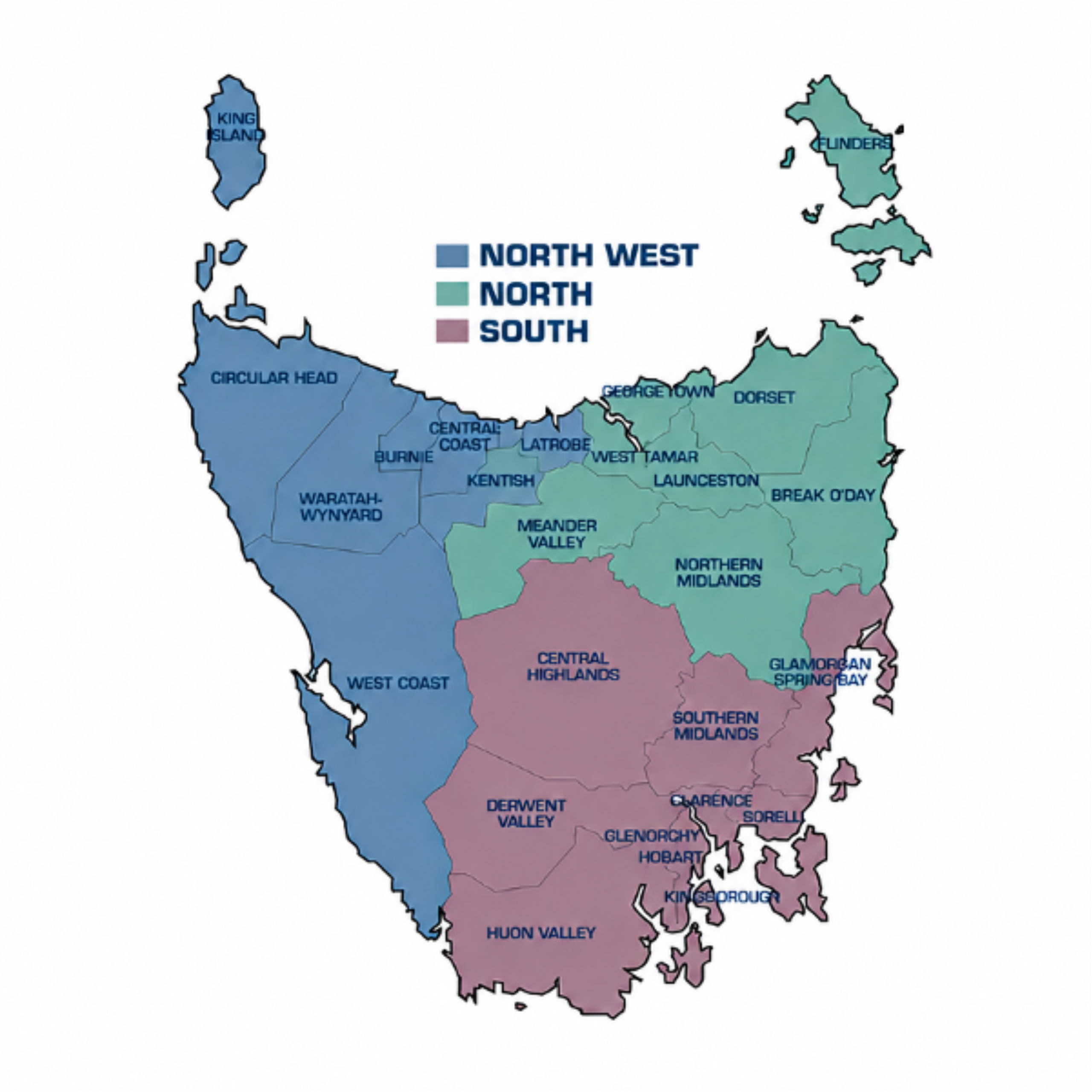
Tasmania’s Regions and Municipal Areas
| ❯ | 3 emergency management regions (Northwest, North and South) |
| ❯ | 29 municipal areas |
Tasmania’s emergency management arrangements are shaped by a range of demographic, geographic and environmental factors, including:
| ❯ | Tasmania has around 570,000 residents spread across a large geographic area. |
| ❯ | Tasmania has a relatively older population compared with many Australian jurisdictions. |
| ❯ | Many communities are located in regional, rural and remote locations. |
| ❯ | Tasmania receives millions of visitors each year. |
| ❯ | Nearly half the State is protected through reserves, national parks and World Heritage areas. |
| ❯ | Tasmania experiences a range of natural, technological, biosecurity and human-caused hazards, including bushfire, flood, storms, heatwaves, public health emergencies and biosecurity threats. |
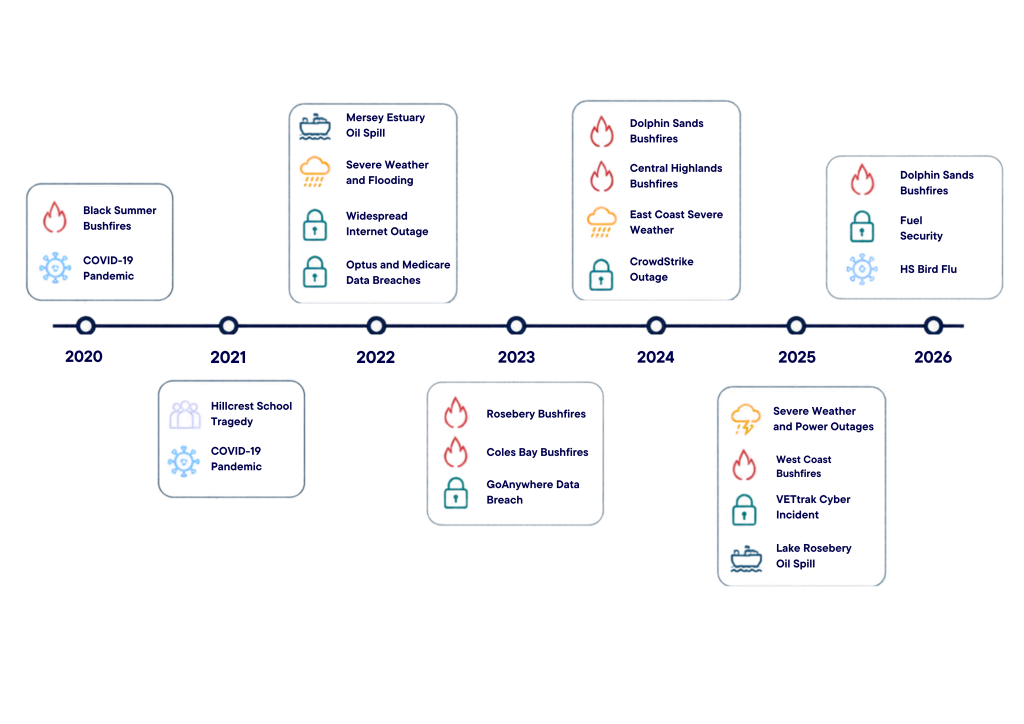
Disasters in Tasmania since 2020
It is important to understand the diverse range of emergencies and disasters that can affect Tasmania. The timeline below highlights significant emergencies and disasters that have affected Tasmania since 2020.
Tasmania’s Emergency Management Approach
Tasmania’s emergency management arrangements are designed to address a diverse range of hazards and risks through a coordinated, all-hazards and resilience-based approach. Tasmania adopts:
| ❯ | All-hazards approach |
| ❯ | Comprehensive approach |
| ❯ | Risk-based approach |
| ❯ | Resilience-based approach |
| ❯ | Integrated and coordinated approach |
| ❯ | Shared responsibility approach |
A Collaborative Approach
Arrangements are underpinned by partnerships between the Australian, state and local governments; businesses and industry; non-government organisations; community groups; emergency management and volunteer organisations; and communities. These partnerships aim to:
| ❯ | Recognise the primacy of life. |
| ❯ | Build whole-of-community resilience to disasters by minimising vulnerability to risks associated with hazards. |
| ❯ | Protect property and the environment. |
| ❯ | Recognise the need to build disaster resilience into business and infrastructure. |
| ❯ | Minimise adverse social and economic impacts during and after emergencies. |
| ❯ | 회복, 복구, 재활 및 재건을 촉진합니다. |
These principles underpin the Tasmanian Emergency Management Arrangements and are complemented by the Tasmanian Disaster Resilience Strategy, which provides a statewide roadmap for strengthening resilience and reducing disaster risk.