


What is Recovery?
Recovery is a critical component of Tasmania’s emergency management arrangements. While recovery is community-led, it is supported by a range of governance structures, coordinators and committees that help communities restore wellbeing, rebuild after emergencies.
What is Successful Recovery?
Successful recovery is community-led. Affected communities play a central role in identifying needs, setting priorities and shaping recovery activities. Recovery arrangements support communities to make informed decisions about their future while drawing on the capabilities of government, non-government organisations, businesses and volunteers.
Recovery outcomes are influenced by the characteristics of the affected community, the nature of the emergency and the changing needs of individuals and communities over time.
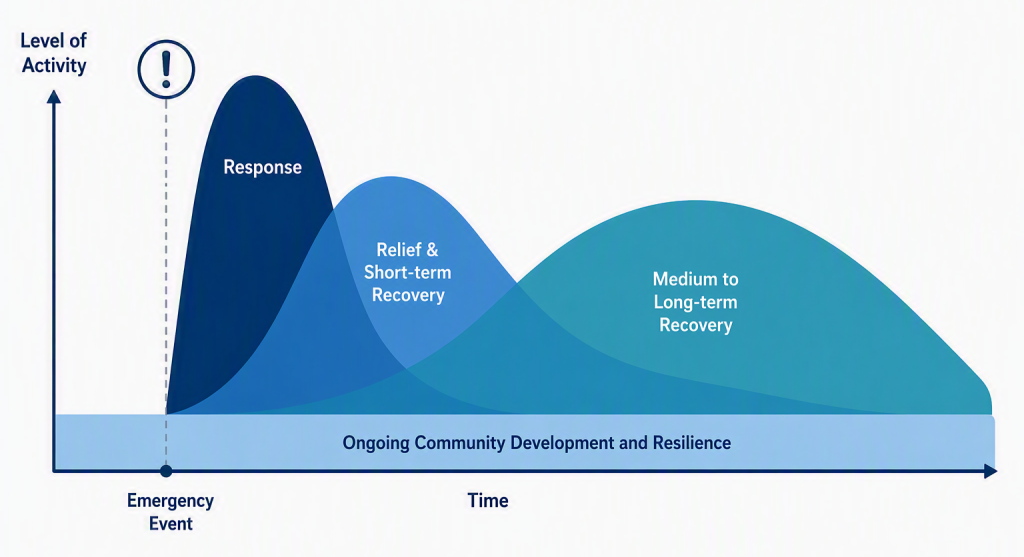
Recovery is not a separate activity that starts after response has finished. Rather, it is a continuous and overlapping process that begins during response and may continue for months or years depending on the impacts of the emergency.
Tasmania’s Recovery Arrangements
The Tasmanian Government recovery objectives are to:
| ❯ | Support the restoration of social, economic, infrastructure and natural environments to minimise long-term consequences for individual and community wellbeing, the economy and the environment. |
| ❯ | Facilitate community participation in recovery planning and decision-making and ensure that government and non-government support is targeted and appropriate. |
| ❯ | Assist communities to rebuild in a way that enhances resilience across social, economic, infrastructure and environmental values and encourages risk management. |
| ❯ | 경험으로부터 배우고 미래의 복구 절차를 향상시키기 위해 지속적으로 준비를 개선하십시오. |
Community-Led Recovery
Tasmania’s recovery arrangements recognise that successful recovery is community-led. Affected communities are best placed to identify their needs, priorities and aspirations for recovery.
Government agencies, local government, businesses, community organisations and volunteers support communities by providing resources, expertise and services throughout the recovery process.
Relief and Short-Term Recovery
Relief is an early part of the recovery process but is focussed on meeting immediate needs, such as shelter, water and food. Relief and short-term recovery are coordinated through emergency management response arrangements
Depending on the scale and complexity of the emergency:
| ❯ | Municipal-level activities may be coordinated by a Municipal Recovery Coordinator and/or Municipal Emergency Management Coordinator. |
| ❯ | Regional-level coordination may be supported by the Regional Emergency Management Controller. |
| ❯ | State-level coordination may be supported by the State Emergency Management Controller and state coordination arrangements. |
Medium and Long term recovery
Medium and long-term recovery focuses on supporting individuals, communities and organisations to achieve an effective level of functioning following an emergency. Recovery activities may continue for months or years depending on the scale, complexity and impacts of the event.
The Department of Premier and Cabinet (DPAC), through the State Recovery Advisor, supports the coordination of recovery arrangements and maintains the State Recovery Plan.
Depending on the scale and complexity of the emergency, recovery may be coordinated at the municipal, regional or state level.
Medium and long-term recovery activities may be supported through recovery committees and, where required, dedicated recovery units or recovery taskforces established to coordinate recovery efforts and support affected communities.

Recovery Domains and Responsibilities
Recovery activities often occur across several interconnected domains. Responsibility for coordinating these domains may involve multiple organisations and agencies. Regardless of the recovery domain, recovery activities should be coordinated in partnership with affected communities and relevant stakeholders.
Financial Assistance
The Tasmanian Relief and Recovery Arrangements (TRRA) is the primary policy under which the Tasmanian Government provides financial assistance to individuals, businesses, non-profit organisations and Municipal Councils affected by an emergency. DPAC is responsible for coordinating advice to the Premier regarding the need for financial assistance following an emergency incident.
Key Recovery Roles in Tasmania
Recovery activities are coordinated at different levels depending on the scale and complexity of the emergency. The following roles support recovery planning, coordination and assistance across Tasmania.
State Recovery Advisor
State Recovery Coordinator
Municipal Recovery Coordinator
Transition from Response to Recovery
Recovery arrangements may commence while response operations are still underway.
As recovery needs emerge, agencies work together to identify impacts, assess community needs and begin planning for recovery activities. This helps ensure a smooth transition between response and recovery.
In accordance with Section 24F of the 2006년 비상관리법, where a State Recovery Coordinator has been appointed, information relating to the emergency is transferred to the State Recovery Coordinator as soon as practicable following the operational response phase.
In Practice – 2019 Tasmanian Bushfires
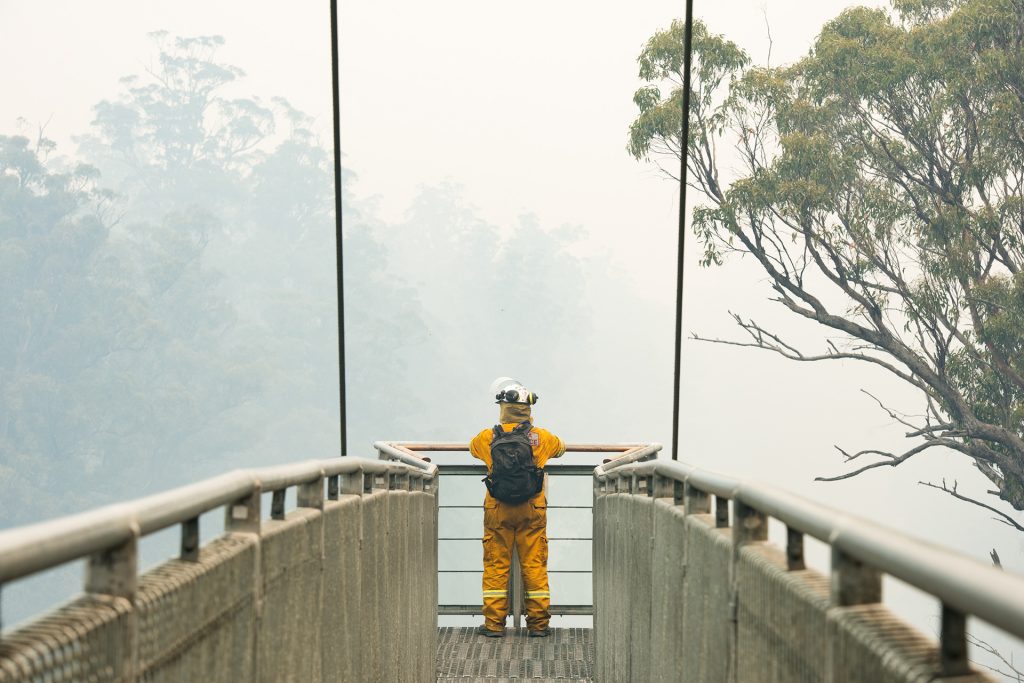
Following the 2019 Tasmanian bushfires, recovery activities ranged from immediate relief and community support through to long-term environmental restoration and economic recovery. Communities received assistance with housing, health and wellbeing, while work also focused on restoring infrastructure, supporting businesses, and rehabilitating affected natural environments.
This demonstrated how recovery occurs over months and years and involves coordinated action across social, infrastructure, economic and environmental recovery domains.
– Completion –