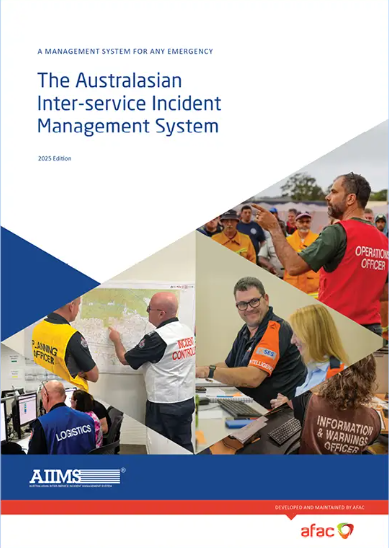


Incident Management Team
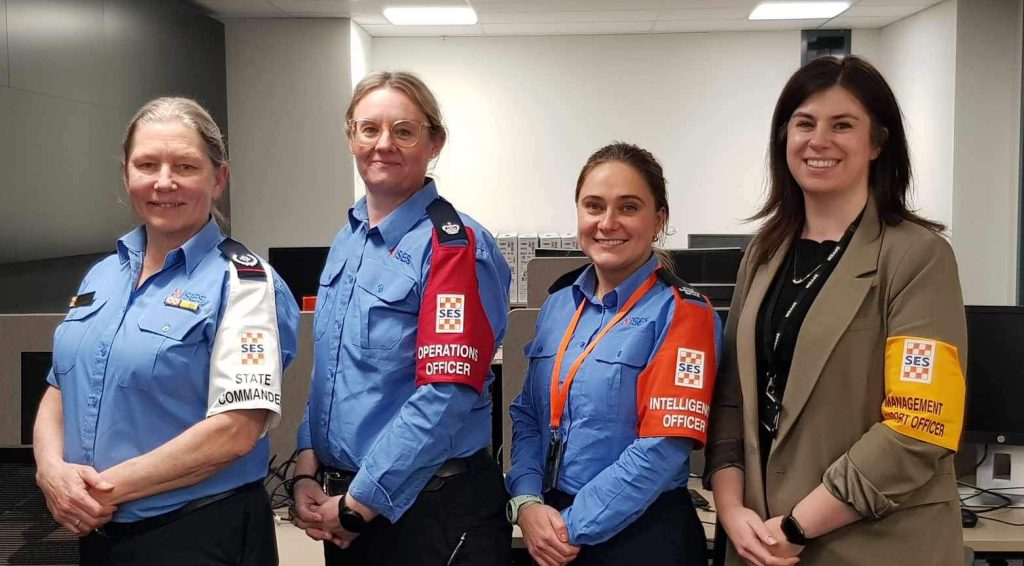
The incident management team is a critical concept in AIIMS. As an incident escalates in either scale of complexity, the incident controller will delegate some of all of the incident management functions to members of an incident management team. The incident controller will build a team that reflects the needs of the incident.
Incident Classification Model
Most agencies have developed standard operating procedures or arrangements that provide guidance for managing and resolving emergency situations they are likely to encounter. Responding to managing an emergency can be complex and challenging. Incidents are classified in three levels:
| ❯ | 레벨 1 – Can be resolved through the use of local or initial response resources using normal management procedures. |
| ❯ | 레벨 2 – More complex incidents that may require additional resources, sectorisation, functional support or expanded incident management arrangements. |
| ❯ | 레벨 3 – Highly complex incidents requiring extensive resources, multi-agency coordination and significant incident management arrangements over an extended period. |
AIIMS Functions
AIIMS groups incident management activities into a number of functions, each with specific responsibilities that support the Incident Controller. The functions established for an incident will depend on the nature, complexity and resource requirements of the event.
Control
Planning
Intelligence
Public Information
Operations
Investigation
Logistics
Finance
Incident Management Team Structure
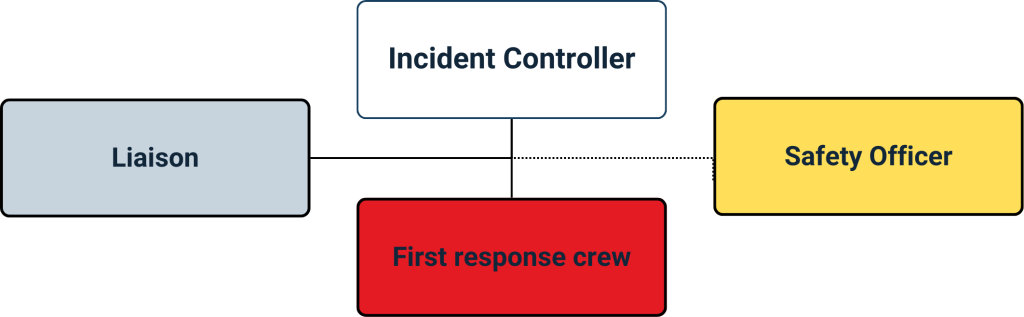
AIIMS functions provide a framework for organising personnel and responsibilities within an Incident Management Team. The following example shows a typical IMT structure.
레벨 1
레벨 2
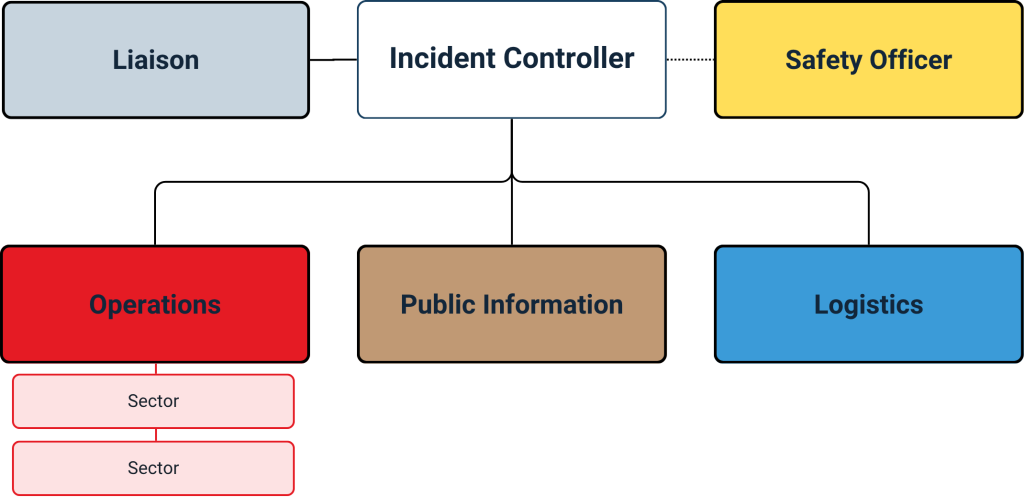
레벨 3
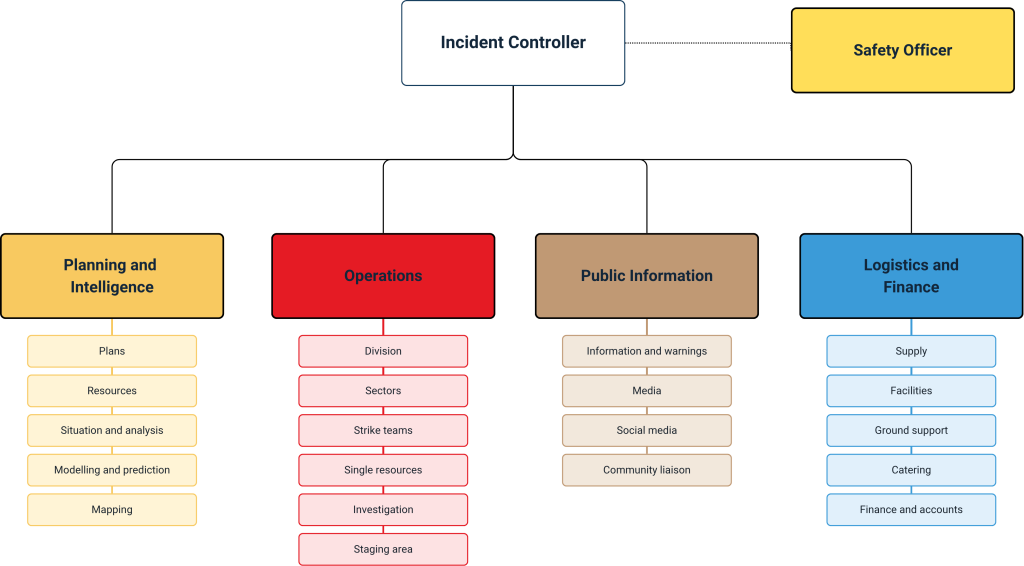
The Incident Controller and functional leads are typically personnel who have completed relevant AIIMS training and have experience working within that function. Depending on the size, complexity and duration of the incident, additional personnel may be assigned to support individual functional areas.
Not all functions or positions are required for every incident, with Incident Management Teams expanding or contracting to meet operational needs.
In Practice: Incident Levels for Fire
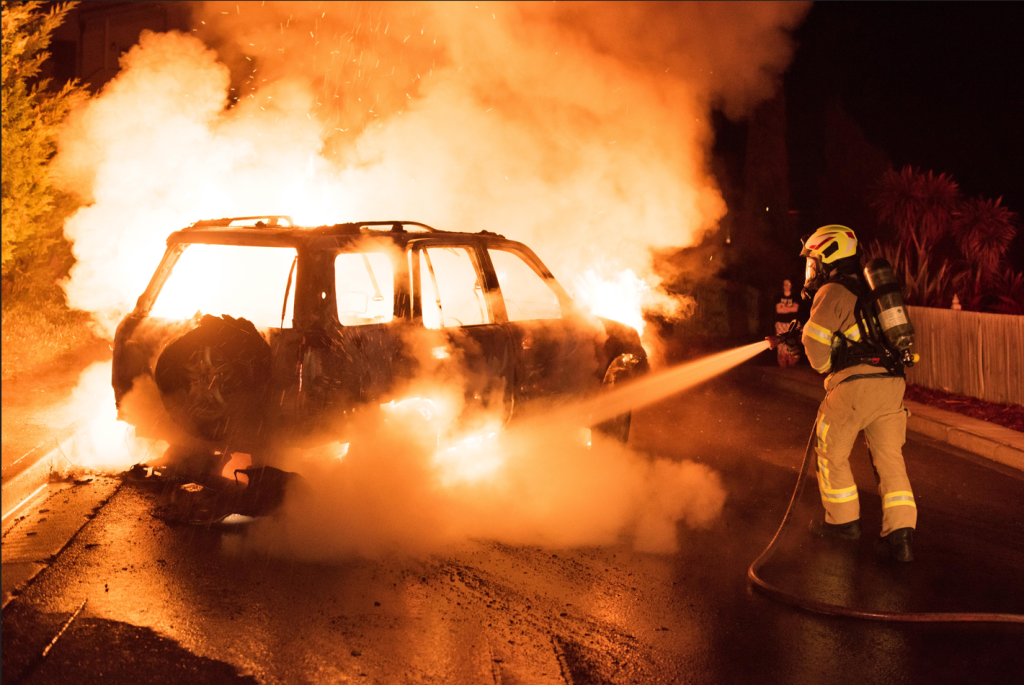
레벨 1
| ❯ | A vehicle fire on a roadside is managed by local responders using available resources and normal management arrangements. |
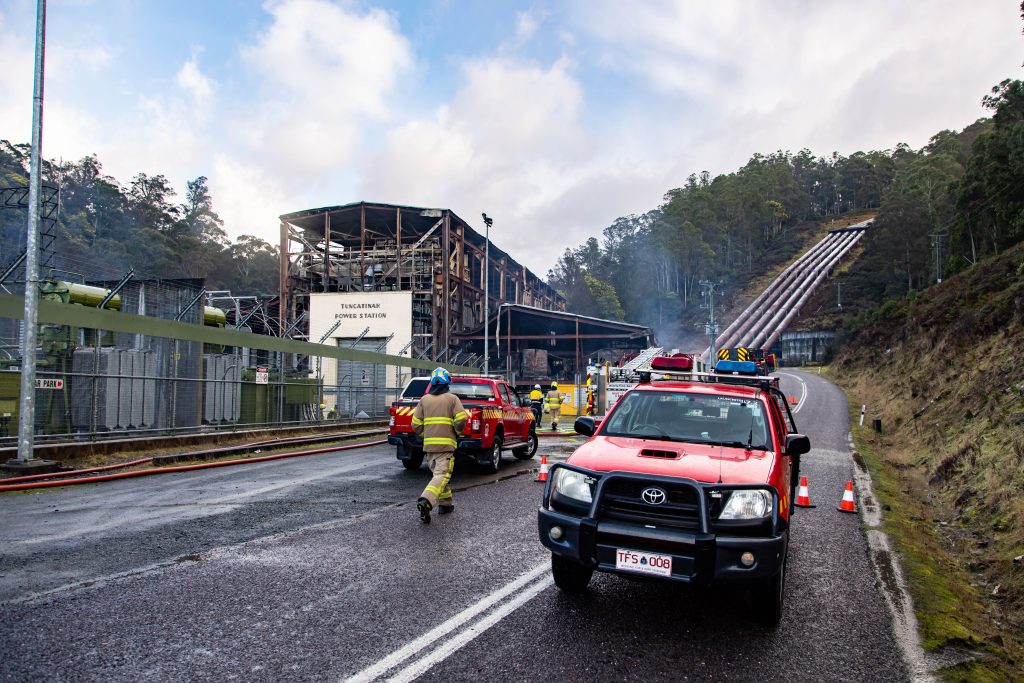
레벨 2
| ❯ | The Tungatinah Power Station fire in the Central Highlands (September 2026) required multiple responding agencies. The complexity of the incident required formal incident management arrangements and coordination beyond an initial response. |
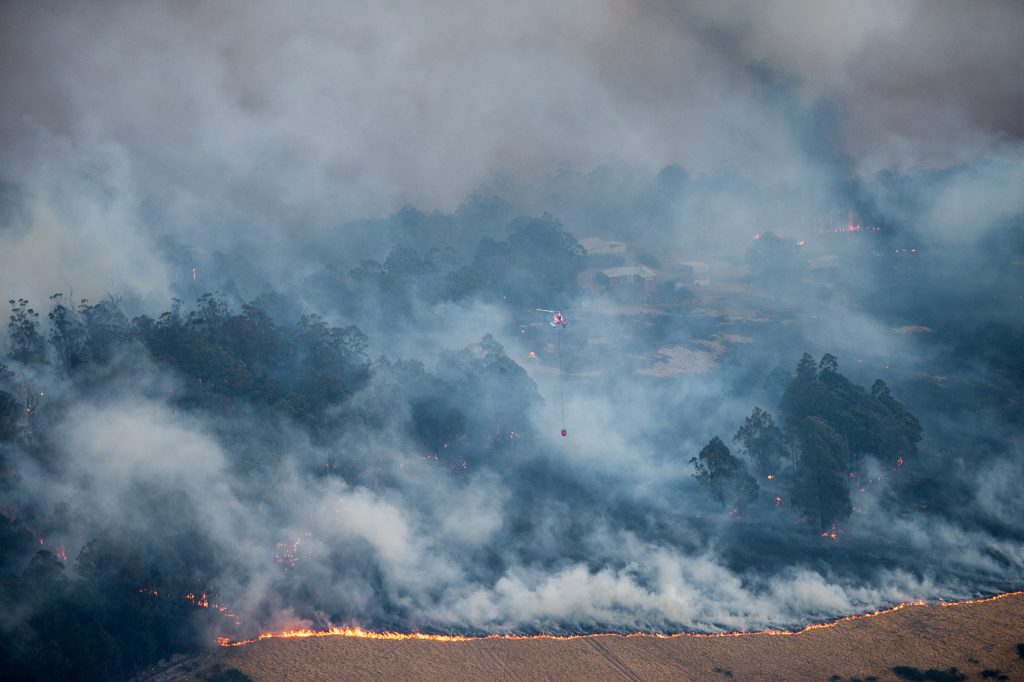
레벨 3
| ❯ | The Tasmanian West Coast Fire Complex (February-April 2025), including fires affecting the Western Tiers and western wilderness regions, involved a prolonged multi-agency response over several months. The scale, duration and coordination requirements were characteristic of a Level 3 incident and required significant strategic coordination, resource management and recovery planning. |
Further Reading