
Incident Controller
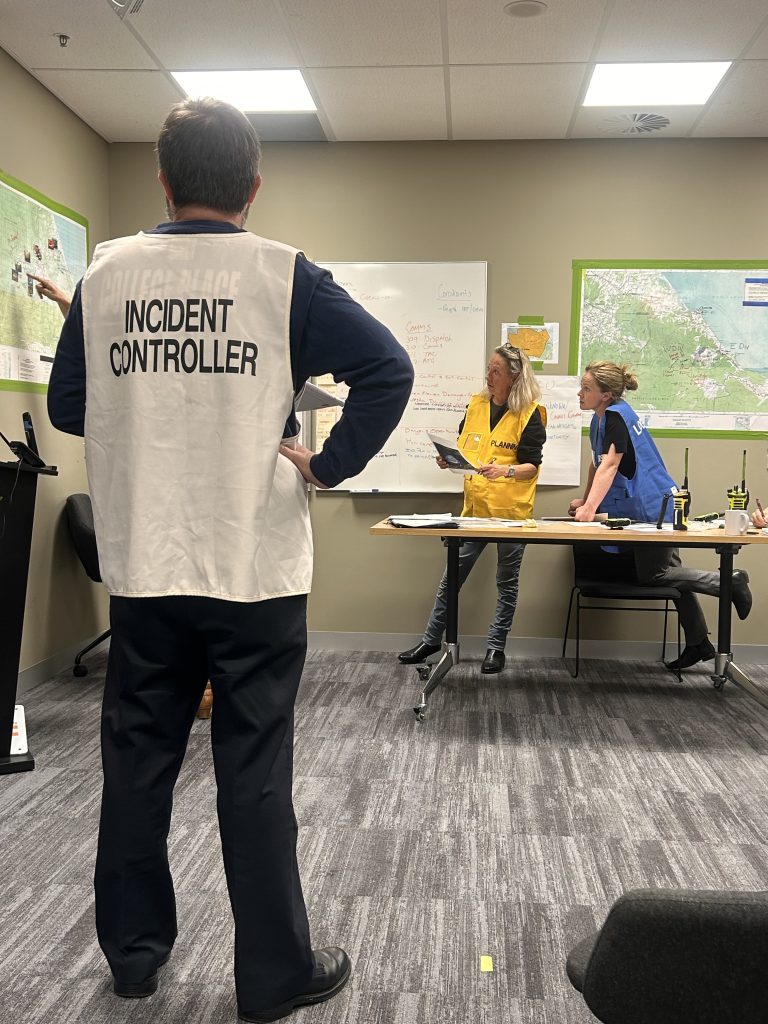
The Incident Controller is responsible for the overall management of the incident. This includes managing activities undertaken to resolve the incident, overseeing personnel and resources, and maintaining effective coordination with organisations, communities and stakeholders affected by, or involved in, the incident.
For each incident, a single Incident Controller is appointed to lead and manage response activities. This person is typically appointed by the organisation with legislative responsibility for managing the hazard, known as the Response Management Authority (RMA).
The Incident Controller is responsible for:
| ❯ | Assess the situation, identify risks and establish incident priorities. |
| ❯ | Establish and maintain control and incident management arrangements. |
| ❯ | Develop and monitor the Incident Action Plan to achieve incident objectives. |
| ❯ | Manage personnel, resources and supporting agencies. |
| ❯ | Monitor safety, communicate with stakeholders and initiate relief and recovery activities. |
Objectives and Incident Action Plan
Management by objectives is a process of management where the incident controller determines the desired outcomes of the incident, in consultation with the necessary stakeholders. The objectives should be reviewed regularly against the common operating picture.
Incident action planning (IAP) is a process that is essential to the management of an incident and describes the objectives and how they are going to be achieved by the incident controller. Supporting Agencies may develop their own plans which will link back to the controllers overall IAP. After consideration of all know factors affecting an incident, an IAP is developed to manage the incident, and is used as a tool to communicate the incident objectives.
การซื้อในแอปใช้เพื่อ:
| ❯ | Specify the overall incident objectives and strategies. |
| ❯ | Identify key threats and risk exposures. |
| ❯ | Ensure the continuity of command and control. |
| ❯ | Ensure effective use of resources. |
| ❯ | ระบุทรัพยากรที่คาดว่าจะต้องใช้. |
Line of Control
Incident management occurs in a broader context than the incident. In Tasmania, usually one position has legislative responsibility and accountability for the control and resource coordination across the state for specified emergencies. These responsibilities often come with statutory powers to take actions in the event of an emergency. Delegation of these powers can be made to the Incident controller, which creates a ‘line of control’ between respective officers in the state, region and incident levels.
Information Flow
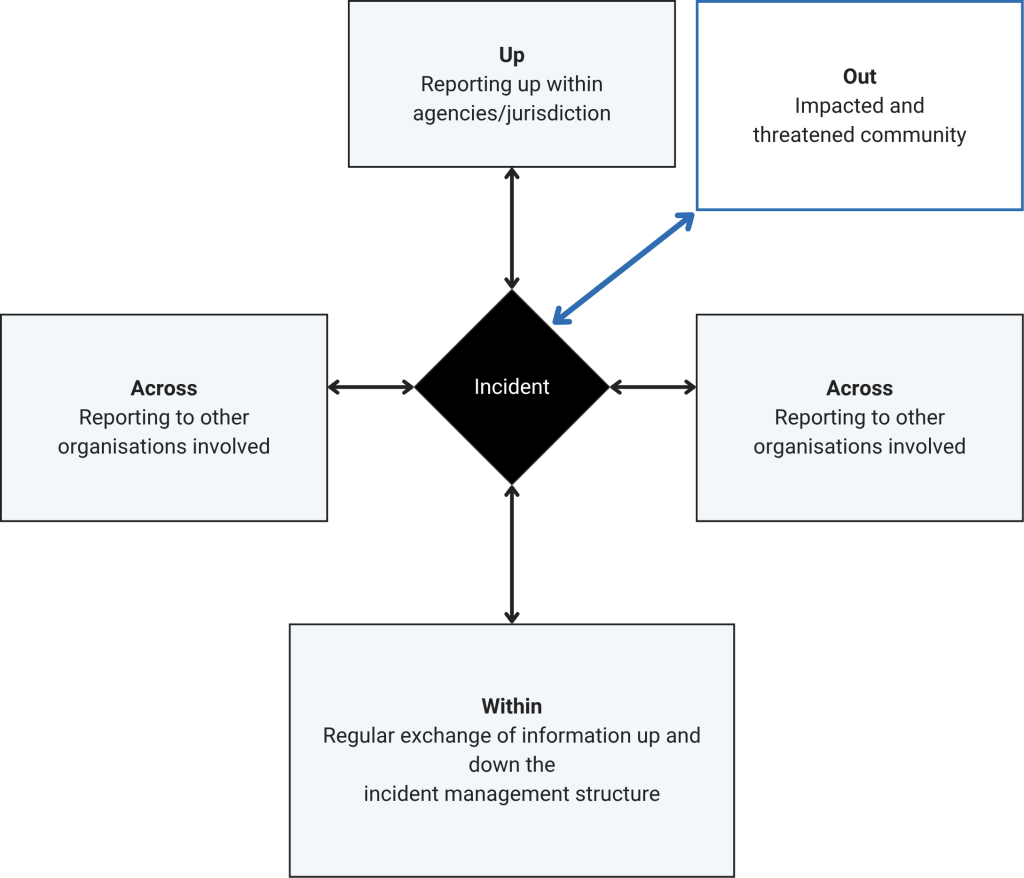
The management of information flows is a critical incident management function. Effective communication processes must be in place to ensure information is shared within the incident management structure, across organisations, with delegating authorities and government, and with communities affected by the incident.
Timely, accurate and relevant information underpins situational awareness and supports informed decision-making. Beyond supporting incident management activities, this information enables other organisations to assess risks, coordinate resources, plan support activities and make decisions within their own areas of responsibility.
The flow of information between these groups is illustrated in the diagram below, adapted from the AIIMS 2025 Manual. The key components of the information flow model are: