

Consequence Management in Tasmania
Response activities focus not only on managing the hazard itself, but also on managing its consequences.
Consequence management involves actions taken to minimise the impacts of an emergency on people, communities, infrastructure, the economy and the environment. While Response Management Authorities focus on controlling or resolving the hazard, consequence management focuses on managing its broader consequences.
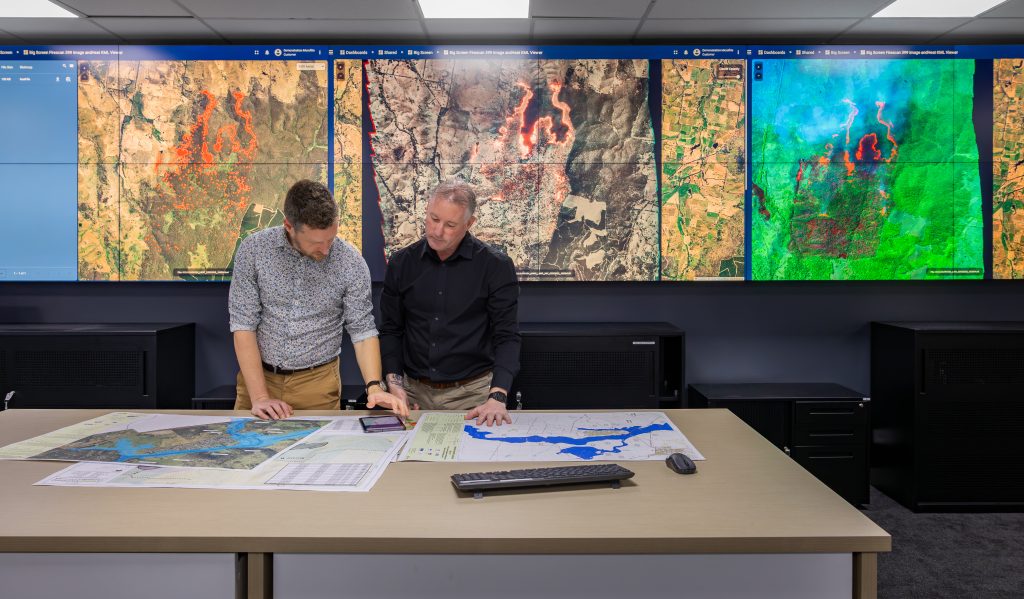
Consequence management may include:
| ❯ | Assessing impacts on communities |
| ❯ | Managing displacement of people |
| ❯ | Protecting critical infrastructure and essential services |
| ❯ | Coordinating welfare and relief arrangements |
| ❯ | Managing public health impacts |
| ❯ | Supporting continuity of essential community functions |
| ❯ | Identifying recovery needs and priorities |
Consequence management requires coordination across agencies, local government, essential service providers and community support organisations. As the impacts of an emergency increase, additional coordination arrangements may be activated to support information sharing, resource coordination, relief activities and the management of community consequences.
Depending on the scale and complexity of the emergency, coordination may occur at the municipal, regional or state level. Dedicated coordination centres may be activated to support consequence management and broader emergency management coordination, including:
| ❯ | Regional Emergency Coordination Centres (RECCs) |
| ❯ | The State Emergency Coordination Centre (SECC) |
The purpose and functions of these centres are outlined below.
Municipal Emergency Management Arrangements
Municipal Councils can be asked to support the Response Management Authority and make resources available. The Regional Controller retains oversight of all response and emergency management activities within the region, which includes all municipalities.
Municipal Emergency Management Coordinator
Municipal Coordinators support local emergency management arrangements and act as a key connection between councils, the Regional Controller (via the Regional Emergency Management Coordinator) and emergency management partners.
The functions and powers of a Municipal Emergency Management Coordinator are established under the 緊急管理法 2006 and may be expanded through direction from the Regional Controller during an emergency.
During an incident, these responsibilities may include:
| ❯ | Supporting and advising the Municipal Emergency Management Committee and Municipal Council |
| ❯ | Providing information to the Regional Controller through the SES Regional Emergency Management Coordinator |
| ❯ | Coordinating council resources requested to support emergency management activities |
| ❯ | Supporting the establishment and management of evacuation and recovery centres |
| ❯ | Communicating decisions and directions to relevant municipal stakeholders |
| ❯ | Identifying additional resource requirements and seeking support where required |
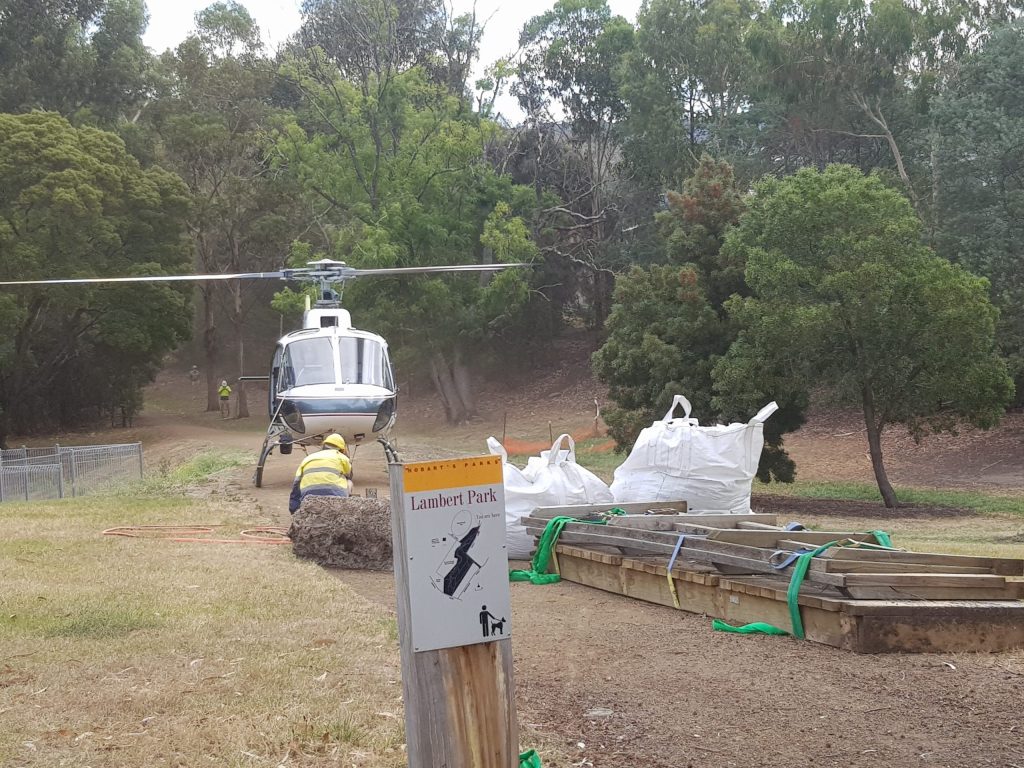
Regional Coordination Arrangements
The Regional Controller is appointed under the 緊急管理法 2006 and is responsible for coordinating emergency management activities within their region.
Regional Emergency Management Coordinator
The SES Regional Emergency Management Coordinator supports the Regional Controller by facilitating information sharing, maintaining situational awareness and coordinating communication between the Response Management Authority, local government and other emergency management partners. The Regional Emergency Management Coordinator supports the following activities:
| ❯ | Supporting the Regional Controller and regional emergency management arrangements |
| ❯ | Facilitating communication between Response Management Authorities, local government and emergency management partners |
| ❯ | Maintaining situational awareness of impacts and emergency management activities across the region |
| ❯ | Supporting the operation of Regional Emergency Coordination Centres (RECCs) |
| ❯ | Assisting with consequence management, relief and recovery coordination activities |
Regional Emergency Coordination Centre (RECC)
The Regional Controller may activate a RECC when an emergency requires increased regional coordination or when consequence management activities extend beyond the capabilities of routine arrangements. A RECC may bring together personnel from a range of agencies and organisations, including emergency services, local government, Response Management Authorities, Support Agencies, and other stakeholders relevant to the emergency. The composition of the RECC will vary depending on the nature, scale and consequences of the event.
A RECC provides a central location for information sharing, coordination and decision-making across the region, including:
| ❯ | Information sharing and situational awareness. |
| ❯ | Resource coordination. |
| ❯ | Consolidating details of damage and impact assessments within the region for reporting purposes. |
| ❯ | Reporting to the State Controller. |
| ❯ | Coordination between agencies and organisations. |
| ❯ | Coordinating relief and short-term recovery arrangements. |
In Practice
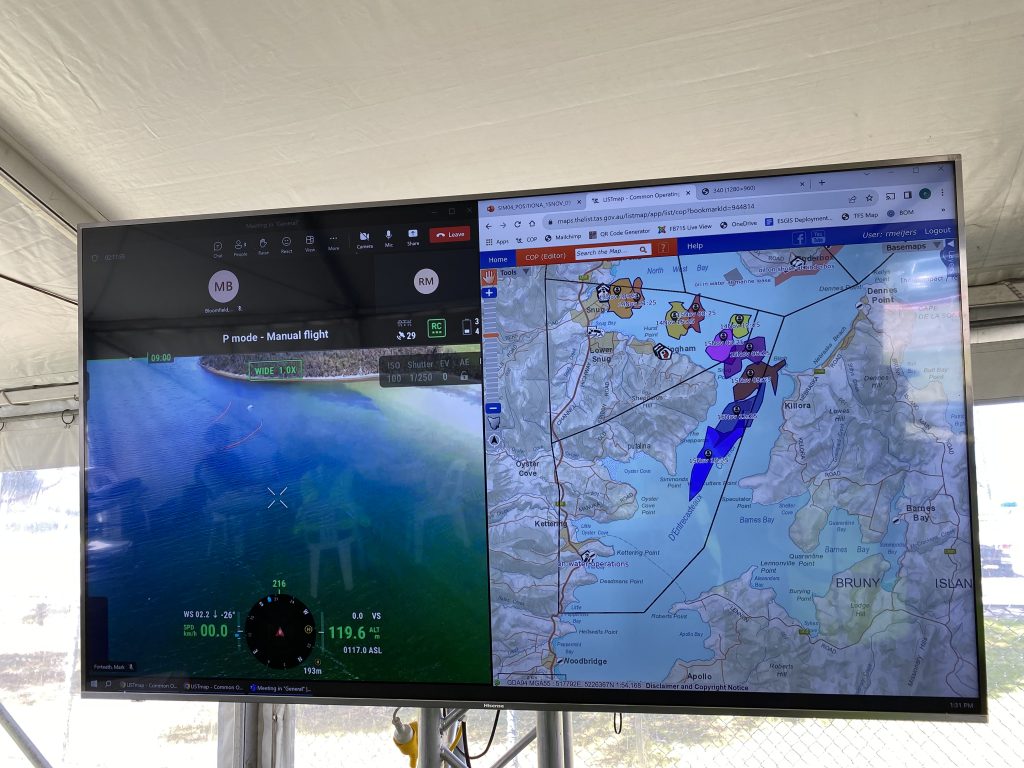
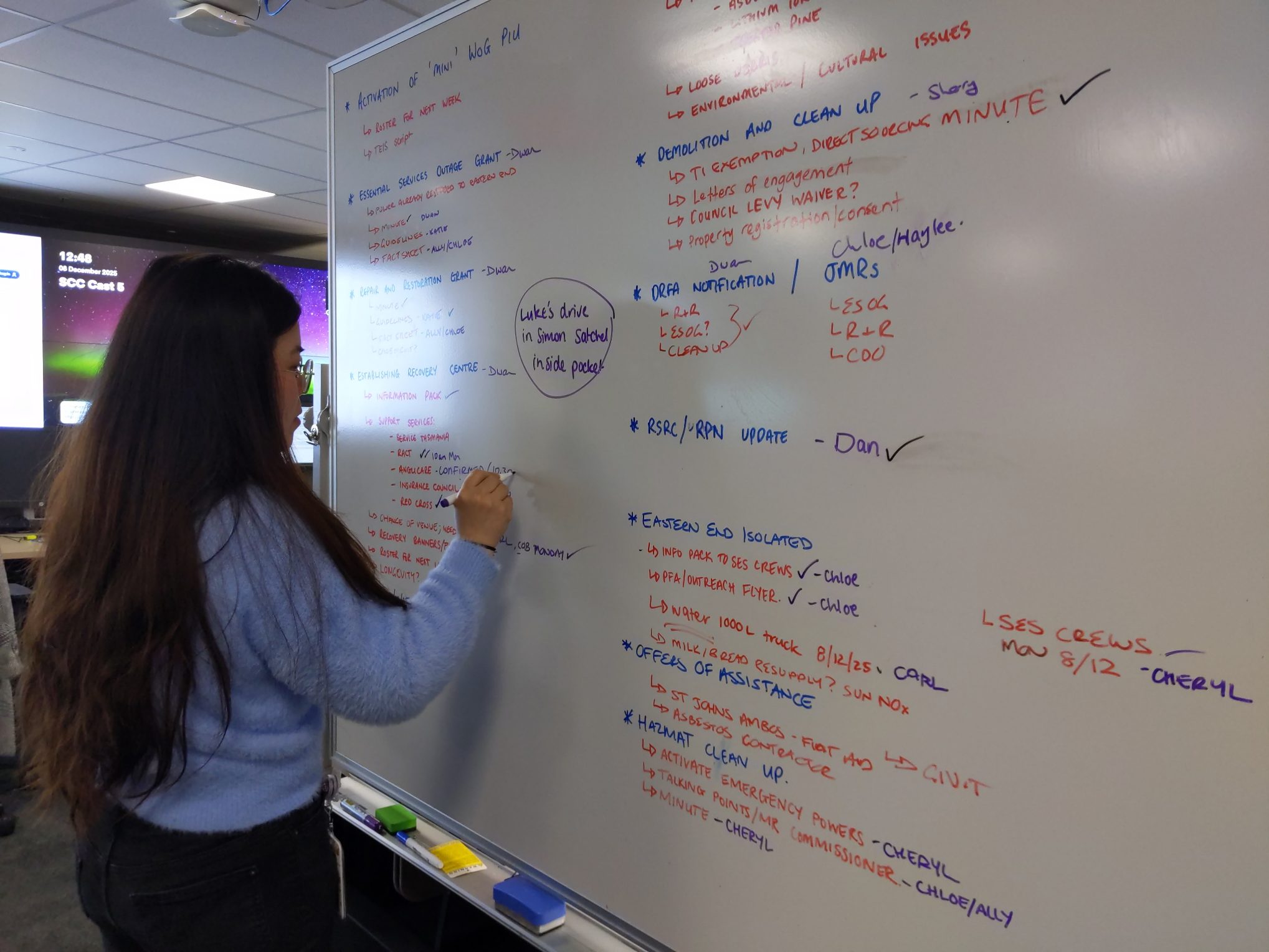
The Dolphin Sands bushfire demonstrated the importance of consequence management alongside operational firefighting activities.
Firefighters focused on controlling the fire, whilst other agencies coordinated evacuation and displacement arrangements, welfare and relief support, impact assessments, road closures, public information, infrastructure impacts and emerging recovery needs.
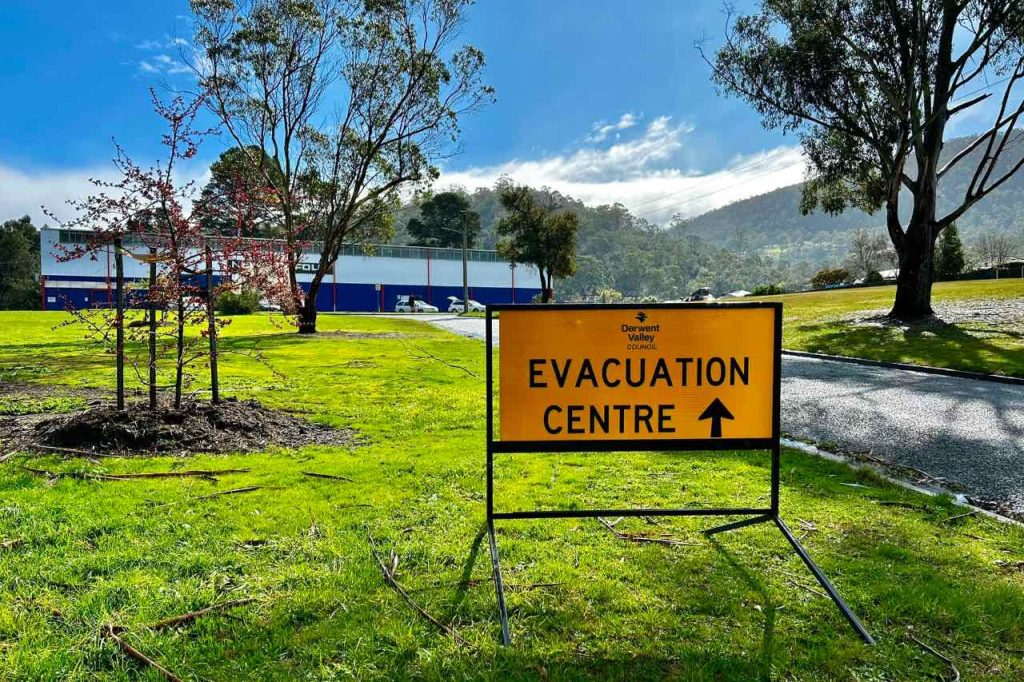
An evacuation centre was established at Swansea Town Hall, illustrating how consequence management focuses on reducing impacts on people, communities, infrastructure and essential services, rather than solely managing the hazard itself.
State Coordination Arrangements
Established under the 緊急管理法 2006, the State Controller coordinates state-level emergency management arrangements and may activate broader coordination arrangements when required.
State Emergency Coordination Centre (SECC)
The State Controller may activate the SECC where an emergency affects multiple regions, has significant statewide consequences or requires a whole-of-government response. The SECC supports strategic coordination across Tasmania and provides a central point for information sharing, resource prioritisation and interagency coordination. The SECC supports:
| ❯ | Statewide situational awareness. |
| ❯ | Interagency coordination. |
| ❯ | Maintenance of effective interoperability. |
| ❯ | Supporting the Response Management Authority and other agencies through the acquisition and coordination of external resources to meet their objectives. |
| ❯ | Establishing the strategic objectives and priorities for the coordination of an emergency. |
| ❯ | Resource prioritisation and allocation. |
Evacuation
Evacuation is a strategy used to reduce loss of life or lessen the effects of a hazard on a community, before or during a disaster.
It involves the movement of people who are threatened by a hazard to a safer location and their safe and timely return.
The RMA holds overarching responsibility for managing the emergency event, including any decision to evacuate. Where evacuation is required, it is incumbent on the RMA to engage the Primary Support Agency to support implementation.
Tasmania adopts a nationally consistent five-stage evacuation process, providing a structured approach to moving people from danger and supporting their safe return.
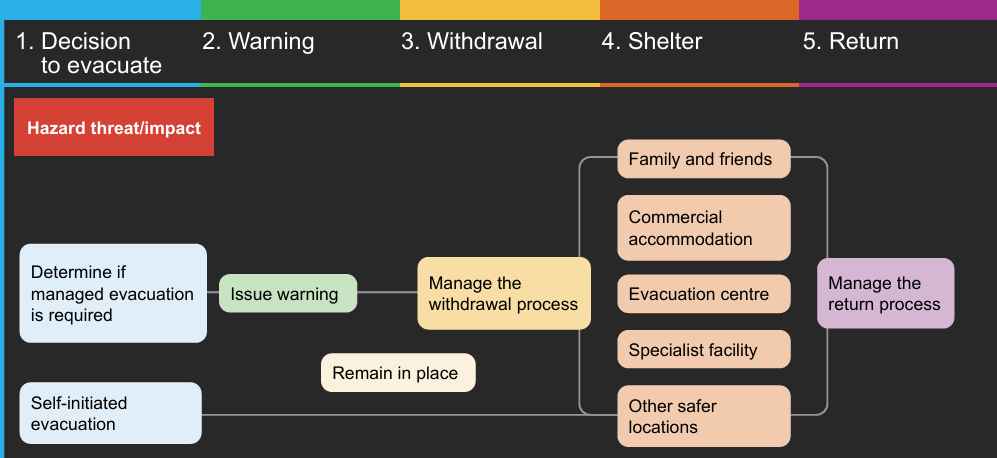
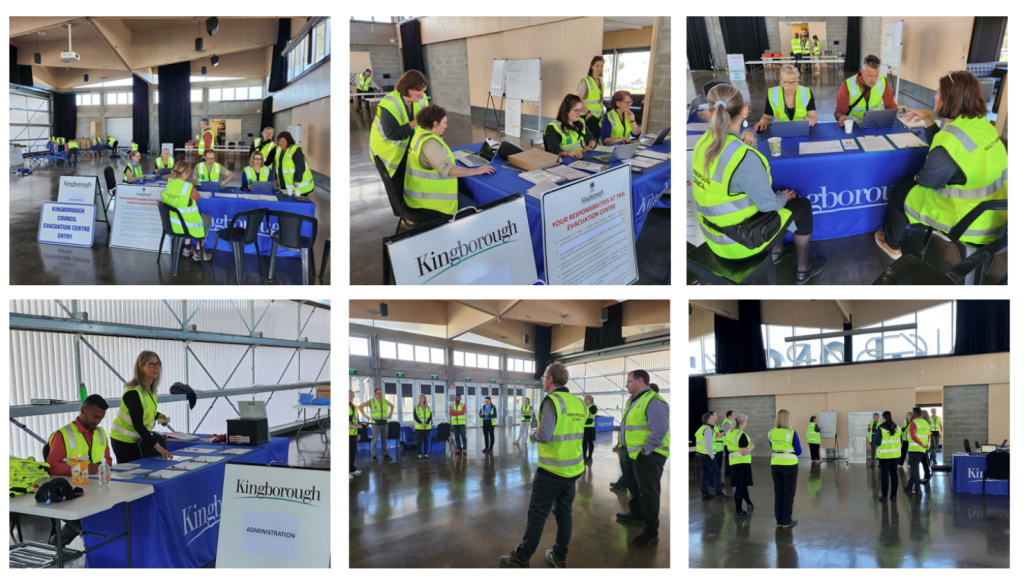
Tasmania Police are the primary support agency for coordination of the withdrawal phase of evacuation, including traffic management. When a Regional Controller formally requests the activation of an evacuation centre, the relevant municipal council becomes the primary support agency for managing the centre.
Relief Arrangements
Relief activities provide immediate assistance and support to people and communities affected by an emergency. Relief arrangements are coordinated through Tasmania’s emergency management arrangements and are typically delivered through a partnership involving government agencies, local government, non-government organisations and volunteers.
Depending on the scale and complexity of the emergency, relief activities may be coordinated at the municipal, regional or state level.
Examples of relief activities include:
| ❯ | Emergency shelter. |
| ❯ | Food and essential supplies. |
| ❯ | Welfare services. |
| ❯ | Information and community support. |
| ❯ | Emergency accommodation. |
| ❯ | Personal support services. |
Information gathered through relief activities helps identify emerging community needs and supports the transition from response to recovery.
Transition to Recovery
Consequence management helps identify community impacts, emerging needs and recovery priorities. Information gathered during consequence management and relief activities supports the transition from response to recovery arrangements.
Recovery planning often begins while response activities are still underway.