
What is Recovery?
Recovery is the restoring or improving of livelihoods and health, as well as economic, physical, social, cultural and environmental assets, systems and activities, of a disaster-affected community or society, aligning with the principles of sustainable development and ‘build back better’, to avoid or reduce future disaster risk.
(United National Office for Disaster Risk Reduction).
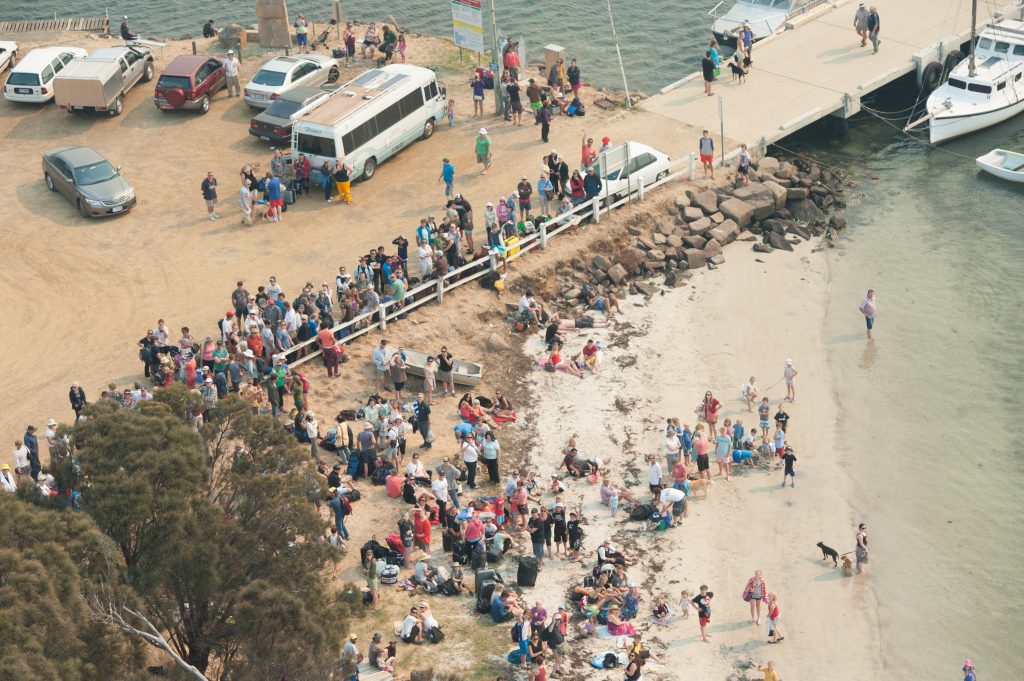
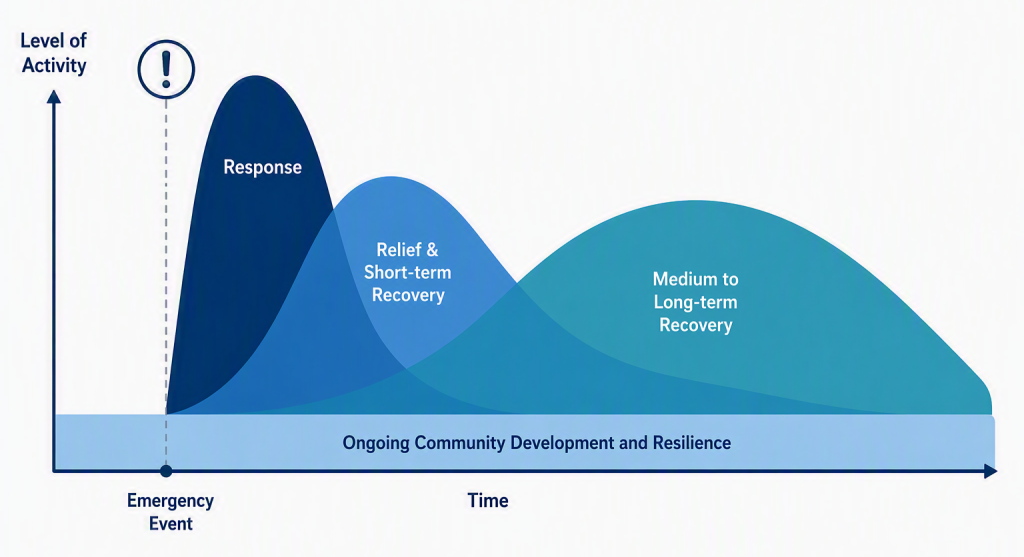
Recovery starts during the emergency response and encompasses linked and overlapping phases of:
| ❯ | Relief and short-term recovery |
| ❯ | Early recovery planning |
| ❯ | Medium to long-term recovery |
This illustrates how recovery activities develop over time, showing the relationship between relief, recovery and ongoing community development following an emergency.
Community Focused Recovery
The impacts of an emergency on a community are influenced not only by the nature and scale of the event, but also by the characteristics of the community itself. Recovery is often complex and shaped by factors such as community relationships, individual circumstances, human behaviour and changing recovery needs over time. Effective recovery recognises that:
| ❯ | Recovery needs and impacts may vary across the community. |
| ❯ | People who are not directly affected by an emergency may still experience impacts. |
| ❯ | Affected individuals and communities may be geographically dispersed. |
| ❯ | People will respond to and recover from emergencies in different ways. |
| ❯ | Recovery activities should be developed in partnership with affected communities. |
| ❯ | Recovery arrangements should be flexible and adapt to changing needs over time. |
| ❯ | Community leaders and local networks play an important role. |
| ❯ | Recovery is a shared responsibility involving communities, governments, businesses and non-government organisations. |
復興とは、政府、非政府組織、地域社会、民間セクターの組織の協調的な取り組みを通じて、地域社会の福祉と経済活動を回復させる活動に人々や地域社会が参加できるようにすることを目指します。.
Principals of Recovery
The principles of successful recovery relies on:
| ❯ | Understand the context: Successful recovery is based on an understanding of the community context, including history, values and dynamics. |
| ❯ | Recognise complexity: 効果的な復旧は、緊急事態と地域社会の両方という複雑で動的な性質に対応するものです。. |
| ❯ | Use community-led approaches: Successful recovery is community-centred, responsive and flexible, engaging with and supporting them to move forward. |
| ❯ | Coordinate all activities: Successful recovery requires a planned, coordinated and adaptive approach between community and partner agencies. |
| ❯ | Communicate effectively: 効果的な復旧は、被災した地域社会と他のパートナーとの間の効果的なコミュニケーションによって成り立っています。. |
| ❯ | Acknowledge and build capacity: 成功した回復は、個人、コミュニティ、組織の能力と回復力を認識し、支援し、構築します。. |
Recovery Activities
Example of recovery activities may include:
ソーシャル
Economic and Financial
Built
環境の
– Completion –